Biology notes · Chapter 7 of 19
Nutrition & Digestive System
12 sections, 75 flashcards. Open a card to check your answer, or revise them in the app with spaced revision.
What is Nutrition?
- Nutrition is the process of taking in food, breaking it down, absorbing it and using it for energy, growth and repair.
- Food is both the body's fuel (for energy) and its building material (for new and repaired cells).
- Digestion is the breaking of large, complex food molecules into small, simple, soluble molecules the blood can absorb.
- Soluble means the molecules can dissolve in watery blood and be carried everywhere.
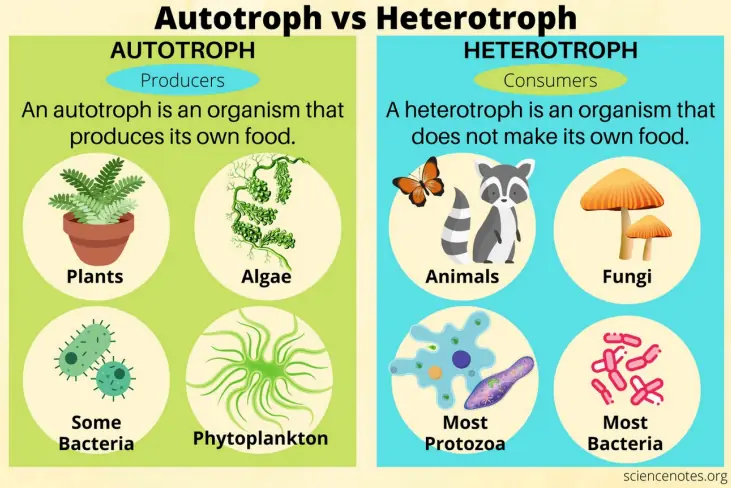
- Autotrophs (green plants) make their own food by photosynthesis; heterotrophs (animals, humans) must eat others.
- Humans are heterotrophs and cannot make their own food.
| Type | Meaning | Example |
|---|---|---|
| Autotroph | Self-feeding (makes food) | Green plants |
| Heterotroph | Feeds on others | Animals, humans |
Check yourself
What is Nutrition?
- Nutrition is the process of taking in food, breaking it down, absorbing it and using it for energy, growth and repair.
- Food is both the body's fuel (for energy) and its building material (for new and repaired cells).
- Digestion is the breaking of large, complex food molecules into small, simple, soluble molecules the blood can absorb.
- Soluble means the molecules can dissolve in watery blood and be carried everywhere.
- Autotrophs (green plants) make their own food by photosynthesis; heterotrophs (animals, humans) must eat others.
- Humans are heterotrophs and cannot make their own food.
- Autotroph — Self-feeding (makes food) — Green plants
- Heterotroph — Feeds on others — Animals, humans
is the process of taking in food, breaking it down, absorbing it and using it for energy, growth and repair.
Nutrition is the process of taking in food, breaking it down, absorbing it and using it for energy, growth and repair.
Food is both the body's (for energy) and its (for new and repaired cells).
Food is both the body's fuel (for energy) and its building material (for new and repaired cells).
is the breaking of large, complex food molecules into small, simple, molecules the blood can absorb.
Digestion is the breaking of large, complex food molecules into small, simple, soluble molecules the blood can absorb.
means the molecules can dissolve in watery blood and be carried everywhere.
Soluble means the molecules can dissolve in watery blood and be carried everywhere.
(green plants) make their own food by photosynthesis; (animals, humans) must eat others.
Autotrophs (green plants) make their own food by photosynthesis; heterotrophs (animals, humans) must eat others.
Humans are and cannot make their own food.
Humans are heterotrophs and cannot make their own food.
Components of Food (Nutrients)
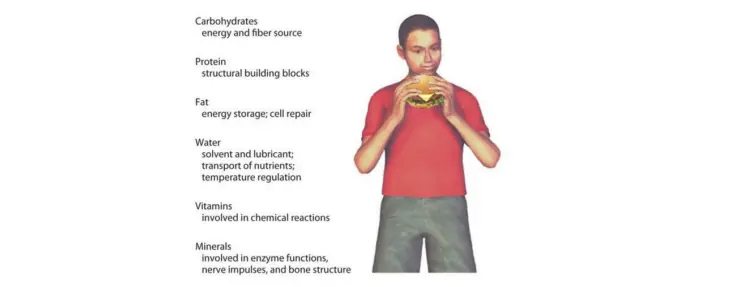
- There are six classes of nutrients: carbohydrates, proteins, fats, vitamins, minerals and water.
- Carbohydrates are the main quick-energy food (rice, wheat, sugar, potato); broken down to glucose.
- Proteins are building material for muscles and tissues (dals, eggs, fish, milk); broken to amino acids.
- Fats (lipids) store energy and give over double the energy of carbohydrates per gram.
- Vitamins and minerals are needed in tiny amounts; their lack causes deficiency diseases.
- Water carries everything and runs every reaction, but gives zero calories.
- Legumes (pulses) are highly nutritious because they are rich in proteins.
| Nutrient | Final product | Main source |
|---|---|---|
| Carbohydrate | Glucose | Rice, wheat, sugar |
| Protein | Amino acids | Dals, eggs, fish |
| Fat | Fatty acids + glycerol | Oils, butter, nuts |
Check yourself
Components of Food (Nutrients)
- There are six classes of nutrients: carbohydrates, proteins, fats, vitamins, minerals and water.
- Carbohydrates are the main quick-energy food (rice, wheat, sugar, potato); broken down to glucose.
- Proteins are building material for muscles and tissues (dals, eggs, fish, milk); broken to amino acids.
- Fats (lipids) store energy and give over double the energy of carbohydrates per gram.
- Vitamins and minerals are needed in tiny amounts; their lack causes deficiency diseases.
- Water carries everything and runs every reaction, but gives zero calories.
- Legumes (pulses) are highly nutritious because they are rich in proteins.
- Carbohydrate — Glucose — Rice, wheat, sugar
- Protein — Amino acids — Dals, eggs, fish
- Fat — Fatty acids + glycerol — Oils, butter, nuts
There are : carbohydrates, proteins, fats, vitamins, minerals and water.
There are six classes of nutrients: carbohydrates, proteins, fats, vitamins, minerals and water.
are the main quick-energy food (rice, wheat, sugar, potato); broken down to .
Carbohydrates are the main quick-energy food (rice, wheat, sugar, potato); broken down to glucose.
are building material for muscles and tissues (dals, eggs, fish, milk); broken to .
Proteins are building material for muscles and tissues (dals, eggs, fish, milk); broken to amino acids.
store energy and give over of carbohydrates per gram.
Fats (lipids) store energy and give over double the energy of carbohydrates per gram.
are needed in tiny amounts; their lack causes .
Vitamins and minerals are needed in tiny amounts; their lack causes deficiency diseases.
carries everything and runs every reaction, but gives .
Water carries everything and runs every reaction, but gives zero calories.
are highly nutritious because they are rich in .
Legumes (pulses) are highly nutritious because they are rich in proteins.
Energy Storage & Milk Facts
- Extra glucose is stored in the liver and muscles as glycogen, nicknamed 'animal starch'.
- Glycogen is the body's ready energy savings account.
- Milk is almost a 'complete food' but lacks vitamin C and is low in iron.
- Milk is rich in calcium, protein, fat and vitamin A.
- A glass of water gives 0 calories (no energy value).
| Milk: rich in | Milk: poor in |
|---|---|
| Calcium, protein | Vitamin C |
| Fat, vitamin A | Iron |
Check yourself
Energy Storage & Milk Facts
- Extra glucose is stored in the liver and muscles as glycogen, nicknamed 'animal starch'.
- Glycogen is the body's ready energy savings account.
- Milk is almost a 'complete food' but lacks vitamin C and is low in iron.
- Milk is rich in calcium, protein, fat and vitamin A.
- A glass of water gives 0 calories (no energy value).
- Calcium, protein — Vitamin C
- Fat, vitamin A — Iron
Extra glucose is stored in the , nicknamed 'animal starch'.
Extra glucose is stored in the liver and muscles as glycogen, nicknamed 'animal starch'.
is the body's ready energy savings account.
Glycogen is the body's ready energy savings account.
is almost a 'complete food' but lacks and is low in .
Milk is almost a 'complete food' but lacks vitamin C and is low in iron.
Vitamins & Deficiency Diseases
- Most vitamins are NOT synthesised in the human body and must come from diet.
- Vitamin K is essential for blood clotting (coagulation).
- Vitamin A is essential for normal vision (its lack causes night blindness).
- Vitamin C deficiency causes scurvy; its richest source is amla (Indian gooseberry).
- Vitamin B2 (riboflavin) deficiency causes cheilosis / ariboflavinosis.
- Vitamin B12 is the anti-anaemic factor; vitamin D prevents rickets.
| Vitamin | Function / Disease | Rich source |
|---|---|---|
| A | Vision / Night blindness | Carrot, milk |
| B2 (Riboflavin) | Cheilosis | Cod-liver oil |
| C | Scurvy | Amla, citrus |
| D | Rickets | Sunlight, fish |
| E | Antioxidant | Wheat germ |
| K | Blood clotting | Green leaves |
Check yourself
Vitamins & Deficiency Diseases
- Most vitamins are NOT synthesised in the human body and must come from diet.
- Vitamin K is essential for blood clotting (coagulation).
- Vitamin A is essential for normal vision (its lack causes night blindness).
- Vitamin C deficiency causes scurvy; its richest source is amla (Indian gooseberry).
- Vitamin B2 (riboflavin) deficiency causes cheilosis / ariboflavinosis.
- Vitamin B12 is the anti-anaemic factor; vitamin D prevents rickets.
- A — Vision / Night blindness — Carrot, milk
- B2 (Riboflavin) — Cheilosis — Cod-liver oil
- C — Scurvy — Amla, citrus
- D — Rickets — Sunlight, fish
- E — Antioxidant — Wheat germ
- K — Blood clotting — Green leaves
Vitamin K is essential for .
Vitamin K is essential for blood clotting (coagulation).
is essential for (its lack causes night blindness).
Vitamin A is essential for normal vision (its lack causes night blindness).
deficiency causes ; its richest source is amla (Indian gooseberry).
Vitamin C deficiency causes scurvy; its richest source is amla (Indian gooseberry).
deficiency causes .
Vitamin B2 (riboflavin) deficiency causes cheilosis / ariboflavinosis.
is the ; vitamin D prevents rickets.
Vitamin B12 is the anti-anaemic factor; vitamin D prevents rickets.
Enzymes – Helpers of Digestion
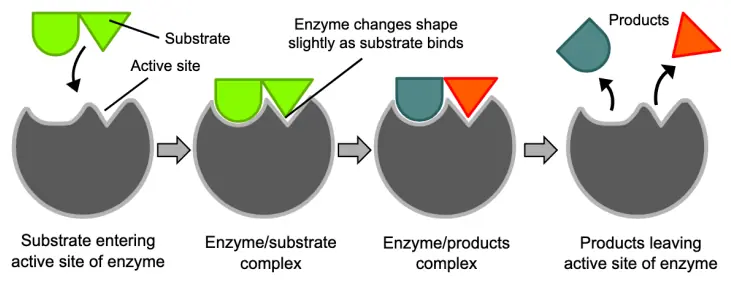
- An enzyme is a biological catalyst that speeds up a reaction without being used up.
- Almost all enzymes are proteins; a few RNA molecules called ribozymes also act as enzymes.
- Each enzyme has an active site that fits one substrate like a key fits one lock.
- Enzymes are denatured (destroyed) by high heat and stop working above about 40°C.
- Some enzymes need a helper called a cofactor (metal ion, prosthetic group or coenzyme).
- Many coenzymes are made from vitamins (e.g. NAD and NADP contain niacin).
- All true cells have enzymes; the exception is a virus, which has no enzymes or metabolism of its own.
Check yourself
Enzymes – Helpers of Digestion
- An enzyme is a biological catalyst that speeds up a reaction without being used up.
- Almost all enzymes are proteins; a few RNA molecules called ribozymes also act as enzymes.
- Each enzyme has an active site that fits one substrate like a key fits one lock.
- Enzymes are denatured (destroyed) by high heat and stop working above about 40°C.
- Some enzymes need a helper called a cofactor (metal ion, prosthetic group or coenzyme).
- Many coenzymes are made from vitamins (e.g. NAD and NADP contain niacin).
- All true cells have enzymes; the exception is a virus, which has no enzymes or metabolism of its own.
An is a biological catalyst that speeds up a reaction without being used up.
An enzyme is a biological catalyst that speeds up a reaction without being used up.
Almost all enzymes are ; a few RNA molecules called also act as enzymes.
Almost all enzymes are proteins; a few RNA molecules called ribozymes also act as enzymes.
Each enzyme has an that fits one like a key fits one lock.
Each enzyme has an active site that fits one substrate like a key fits one lock.
Enzymes are and stop working above about .
Enzymes are denatured (destroyed) by high heat and stop working above about 40°C.
Some enzymes need a helper called a (metal ion, prosthetic group or coenzyme).
Some enzymes need a helper called a cofactor (metal ion, prosthetic group or coenzyme).
Many coenzymes are made from (e.g. NAD and NADP contain niacin).
Many coenzymes are made from vitamins (e.g. NAD and NADP contain niacin).
All true cells have enzymes; the exception is a , which has no enzymes or metabolism of its own.
All true cells have enzymes; the exception is a virus, which has no enzymes or metabolism of its own.
Human Digestive System – Overview
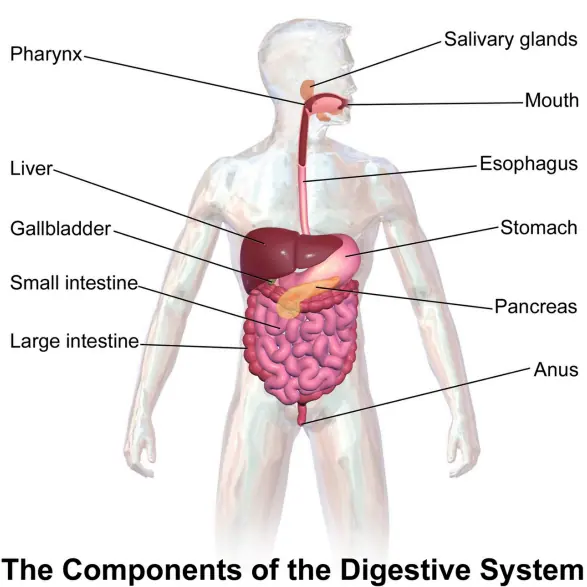
- The system has two parts: the alimentary canal and the digestive glands.
- The alimentary canal is one food tube about 9 metres long, from mouth to anus.
- Order: mouth → pharynx → oesophagus → stomach → small intestine → large intestine → rectum → anus.
- The three accessory glands are the salivary glands, liver (with gall bladder) and pancreas.
- Starch digestion starts in the mouth, protein in the stomach, and all food is finally digested in the small intestine.
- Digestion is a relay, passed from organ to organ along the canal.
| Organ | Main action |
|---|---|
| Mouth | Starch digestion begins |
| Stomach | Protein digestion begins |
| Small intestine | All food fully digested + absorbed |
| Large intestine | Water absorption |
Check yourself
Human Digestive System – Overview
- The system has two parts: the alimentary canal and the digestive glands.
- The alimentary canal is one food tube about 9 metres long, from mouth to anus.
- Order: mouth → pharynx → oesophagus → stomach → small intestine → large intestine → rectum → anus.
- The three accessory glands are the salivary glands, liver (with gall bladder) and pancreas.
- Starch digestion starts in the mouth, protein in the stomach, and all food is finally digested in the small intestine.
- Digestion is a relay, passed from organ to organ along the canal.
- Mouth — Starch digestion begins
- Stomach — Protein digestion begins
- Small intestine — All food fully digested + absorbed
- Large intestine — Water absorption
The system has two parts: the and the .
The system has two parts: the alimentary canal and the digestive glands.
The alimentary canal is one food tube about , from mouth to anus.
The alimentary canal is one food tube about 9 metres long, from mouth to anus.
, protein in the stomach, and all food is finally digested in the small intestine.
Starch digestion starts in the mouth, protein in the stomach, and all food is finally digested in the small intestine.
Digestion is a , passed from organ to organ along the canal.
Digestion is a relay, passed from organ to organ along the canal.
Mouth (Buccal Cavity)
- Digestion begins in the mouth; teeth chew (mastication) and the tongue mixes food with saliva.
- Food rolled into a soft, slippery ball is called a bolus.
- Teeth set in sockets in the jaw is called thecodont; two sets of teeth in life is diphyodont.
- Saliva contains salivary amylase (ptyalin) and the germ-killing enzyme lysozyme.
- Salivary amylase digests starch into maltose – the first chemical step of digestion.
- This is why plain bread or rice slowly tastes sweet when kept in the mouth.
- Swallowing the bolus is called deglutition.
| Tooth type | Function |
|---|---|
| Incisors | Cutting, biting |
| Canines | Tearing |
| Premolars | Grinding |
| Molars | Grinding, crushing |
Check yourself
Mouth (Buccal Cavity)
- Digestion begins in the mouth; teeth chew (mastication) and the tongue mixes food with saliva.
- Food rolled into a soft, slippery ball is called a bolus.
- Teeth set in sockets in the jaw is called thecodont; two sets of teeth in life is diphyodont.
- Saliva contains salivary amylase (ptyalin) and the germ-killing enzyme lysozyme.
- Salivary amylase digests starch into maltose – the first chemical step of digestion.
- This is why plain bread or rice slowly tastes sweet when kept in the mouth.
- Swallowing the bolus is called deglutition.
- Incisors — Cutting, biting
- Canines — Tearing
- Premolars — Grinding
- Molars — Grinding, crushing
Digestion ; teeth chew () and the tongue mixes food with saliva.
Digestion begins in the mouth; teeth chew (mastication) and the tongue mixes food with saliva.
Food rolled into a soft, slippery ball is called a .
Food rolled into a soft, slippery ball is called a bolus.
Teeth set in sockets in the jaw is called ; two sets of teeth in life is .
Teeth set in sockets in the jaw is called thecodont; two sets of teeth in life is diphyodont.
Saliva contains and the germ-killing enzyme .
Saliva contains salivary amylase (ptyalin) and the germ-killing enzyme lysozyme.
This is why plain bread or rice slowly tastes when kept in the mouth.
This is why plain bread or rice slowly tastes sweet when kept in the mouth.
Swallowing the bolus is called .
Swallowing the bolus is called deglutition.
Oesophagus & Peristalsis
- The oesophagus (food pipe) is a muscular tube carrying the bolus to the stomach.
- The oesophagus does NOT digest food – it is only a passage.
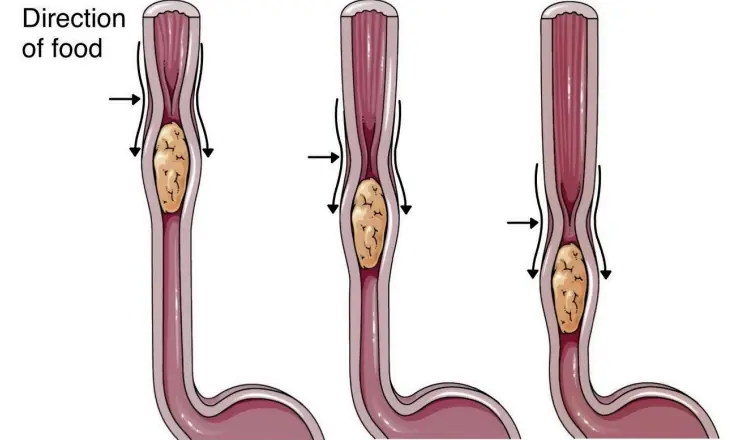
- Food moves by peristalsis: wave-like contractions of the muscular wall.
- Peristalsis squeezes food downward and occurs all along the alimentary canal.
- These muscular waves let food move even against gravity.
Check yourself
Oesophagus & Peristalsis
- The oesophagus (food pipe) is a muscular tube carrying the bolus to the stomach.
- The oesophagus does NOT digest food – it is only a passage.
- Food moves by peristalsis: wave-like contractions of the muscular wall.
- Peristalsis squeezes food downward and occurs all along the alimentary canal.
- These muscular waves let food move even against gravity.
The is a muscular tube carrying the bolus to the stomach.
The oesophagus (food pipe) is a muscular tube carrying the bolus to the stomach.
The oesophagus – it is only a passage.
The oesophagus does NOT digest food – it is only a passage.
Food moves by : wave-like contractions of the muscular wall.
Food moves by peristalsis: wave-like contractions of the muscular wall.
squeezes food downward and occurs all along the alimentary canal.
Peristalsis squeezes food downward and occurs all along the alimentary canal.
These muscular waves let food move even .
These muscular waves let food move even against gravity.
Stomach – Protein Digestion Begins
- Protein digestion begins in the stomach.
- The stomach secretes hydrochloric acid (HCl), which kills germs and gives an acidic medium.
- The enzyme pepsin digests proteins into smaller peptides.
- Trypsin and chymotrypsin are pancreatic enzymes, NOT secreted by the stomach.
- The acid plus enzymes turn food into a semi-liquid paste called chyme.
- A layer of mucus protects the stomach wall from its own acid.
| Stomach secretion | Role |
|---|---|
| HCl | Kills germs, acidic medium |
| Pepsin | Digests protein |
| Mucus | Protects stomach lining |
Check yourself
Stomach – Protein Digestion Begins
- Protein digestion begins in the stomach.
- The stomach secretes hydrochloric acid (HCl), which kills germs and gives an acidic medium.
- The enzyme pepsin digests proteins into smaller peptides.
- Trypsin and chymotrypsin are pancreatic enzymes, NOT secreted by the stomach.
- The acid plus enzymes turn food into a semi-liquid paste called chyme.
- A layer of mucus protects the stomach wall from its own acid.
- HCl — Kills germs, acidic medium
- Pepsin — Digests protein
- Mucus — Protects stomach lining
The stomach secretes , which kills germs and gives an acidic medium.
The stomach secretes hydrochloric acid (HCl), which kills germs and gives an acidic medium.
The enzyme digests proteins into smaller peptides.
The enzyme pepsin digests proteins into smaller peptides.
are pancreatic enzymes, NOT secreted by the stomach.
Trypsin and chymotrypsin are pancreatic enzymes, NOT secreted by the stomach.
The acid plus enzymes turn food into a semi-liquid paste called .
The acid plus enzymes turn food into a semi-liquid paste called chyme.
A layer of protects the stomach wall from its own acid.
A layer of mucus protects the stomach wall from its own acid.
Liver, Bile & Pancreas
- The liver is the largest gland; it makes bile, stored in the gall bladder.
- Bile is received by the small intestine (duodenum) from the liver.
- Bile emulsifies fats (breaks large fat drops into tiny ones) but contains no enzymes.
- Gallstones in the gall bladder block bile and affect fat digestion.
- The pancreas secretes pancreatic juice with trypsin, lipase and amylase.
- The liver also stores glycogen, iron and some vitamins.
| Gland | Secretion | Acts on |
|---|---|---|
| Liver | Bile | Fats (emulsify) |
| Pancreas | Trypsin | Proteins |
| Pancreas | Lipase | Fats |
Check yourself
Liver, Bile & Pancreas
- The liver is the largest gland; it makes bile, stored in the gall bladder.
- Bile is received by the small intestine (duodenum) from the liver.
- Bile emulsifies fats (breaks large fat drops into tiny ones) but contains no enzymes.
- Gallstones in the gall bladder block bile and affect fat digestion.
- The pancreas secretes pancreatic juice with trypsin, lipase and amylase.
- The liver also stores glycogen, iron and some vitamins.
- Liver — Bile — Fats (emulsify)
- Pancreas — Trypsin — Proteins
- Pancreas — Lipase — Fats
The is the largest gland; it makes , stored in the .
The liver is the largest gland; it makes bile, stored in the gall bladder.
Bile (breaks large fat drops into tiny ones) but contains no enzymes.
Bile emulsifies fats (breaks large fat drops into tiny ones) but contains no enzymes.
in the gall bladder block bile and affect .
Gallstones in the gall bladder block bile and affect fat digestion.
The secretes pancreatic juice with .
The pancreas secretes pancreatic juice with trypsin, lipase and amylase.
Small Intestine – Final Digestion & Absorption
- The small intestine is where ALL food is finally and fully digested.
- It receives bile from the liver and pancreatic juice in its first part, the duodenum.
- Carbohydrates become glucose, proteins become amino acids, fats become fatty acids and glycerol.
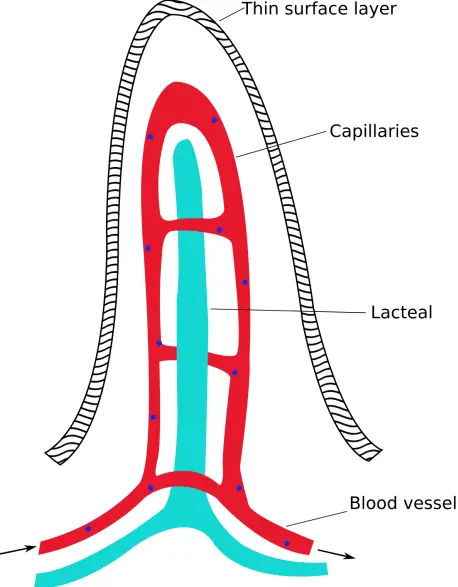
- Its inner wall has tiny finger-like villi that hugely increase absorbing surface area.
- Absorption of digested food into the blood happens mainly here.
- The human body cannot digest cellulose (roughage/fibre), as it lacks the enzyme to break it.
Check yourself
Small Intestine – Final Digestion & Absorption
- The small intestine is where ALL food is finally and fully digested.
- It receives bile from the liver and pancreatic juice in its first part, the duodenum.
- Carbohydrates become glucose, proteins become amino acids, fats become fatty acids and glycerol.
- Its inner wall has tiny finger-like villi that hugely increase absorbing surface area.
- Absorption of digested food into the blood happens mainly here.
- The human body cannot digest cellulose (roughage/fibre), as it lacks the enzyme to break it.
The is where ALL food is finally and fully digested.
The small intestine is where ALL food is finally and fully digested.
It receives and in its first part, the duodenum.
It receives bile from the liver and pancreatic juice in its first part, the duodenum.
Carbohydrates become , proteins become , fats become .
Carbohydrates become glucose, proteins become amino acids, fats become fatty acids and glycerol.
Its inner wall has tiny finger-like that hugely increase absorbing surface area.
Its inner wall has tiny finger-like villi that hugely increase absorbing surface area.
of digested food into the blood happens mainly here.
Absorption of digested food into the blood happens mainly here.
The human body (roughage/fibre), as it lacks the enzyme to break it.
The human body cannot digest cellulose (roughage/fibre), as it lacks the enzyme to break it.
Large Intestine & Egestion
- The large intestine absorbs mostly water from undigested food.
- Undigested matter forms faeces, stored in the rectum.
- Removal of faeces through the anus is called egestion (defaecation).
- Cellulose (fibre) is not digested by humans but adds essential roughage.
- Roughage helps the smooth movement of food and prevents constipation.
Check yourself
Large Intestine & Egestion
- The large intestine absorbs mostly water from undigested food.
- Undigested matter forms faeces, stored in the rectum.
- Removal of faeces through the anus is called egestion (defaecation).
- Cellulose (fibre) is not digested by humans but adds essential roughage.
- Roughage helps the smooth movement of food and prevents constipation.
The absorbs mostly from undigested food.
The large intestine absorbs mostly water from undigested food.
Undigested matter forms , stored in the .
Undigested matter forms faeces, stored in the rectum.
Removal of faeces through the anus is called .
Removal of faeces through the anus is called egestion (defaecation).
is not digested by humans but adds essential .
Cellulose (fibre) is not digested by humans but adds essential roughage.
Roughage helps the smooth movement of food and prevents .
Roughage helps the smooth movement of food and prevents constipation.
All 19 chapters of Biology notes
- Cell: Structure & Function12 sections
- Biomolecules & DNA/RNA11 sections
- Plant Kingdom & Classification11 sections
- Plant Tissues & Anatomy12 sections
- Plant Physiology: Photosynthesis, Respiration & Nutrition14 sections
- Animal Kingdom, Morphology & Classification16 sections
- Nutrition & Digestive System12 sections
- Circulatory System & Body Fluids12 sections
- Respiratory System10 sections
- Excretory System12 sections
- Nervous System & Sense Organs12 sections
- Endocrine System & Hormones14 sections
- Skeletal & Muscular System12 sections
- Reproductive System & Reproductive Health12 sections
- Genetics & Evolution13 sections
- Human Health, Diseases & Immunity16 sections
- Ecology, Ecosystem & Biodiversity12 sections
- Biology in Everyday Life & Applied Biology12 sections
- Inventions, Discoveries & Scientists10 sections