Biology notes · Chapter 1 of 19
Cell: Structure & Function
12 sections, 69 flashcards. Open a card to check your answer, or revise them in the app with spaced revision.
What Is a Cell?
- The cell is the smallest unit of life that can survive and carry out all life activities on its own.
- It is called the basic structural and functional unit of life – the building block and the smallest working part.
- Unicellular organisms have one cell (Amoeba, bacteria) that does everything itself.
- Multicellular organisms (humans, plants) are made of many cells with a division of labour.
- Inside a cell, tiny organelles each handle one special task (energy, waste, etc.).
- Anything smaller than a cell cannot live independently.
Check yourself
What Is a Cell?
- The cell is the smallest unit of life that can survive and carry out all life activities on its own.
- It is called the basic structural and functional unit of life – the building block and the smallest working part.
- Unicellular organisms have one cell (Amoeba, bacteria) that does everything itself.
- Multicellular organisms (humans, plants) are made of many cells with a division of labour.
- Inside a cell, tiny organelles each handle one special task (energy, waste, etc.).
- Anything smaller than a cell cannot live independently.
The is the smallest unit of life that can survive and carry out all life activities on its own.
The cell is the smallest unit of life that can survive and carry out all life activities on its own.
It is called the – the building block and the smallest working part.
It is called the basic structural and functional unit of life – the building block and the smallest working part.
organisms have one cell (Amoeba, bacteria) that does everything itself.
Unicellular organisms have one cell (Amoeba, bacteria) that does everything itself.
organisms (humans, plants) are made of many cells with a .
Multicellular organisms (humans, plants) are made of many cells with a division of labour.
Inside a cell, tiny each handle one special task (energy, waste, etc.).
Inside a cell, tiny organelles each handle one special task (energy, waste, etc.).
History & Discovery of the Cell
- The cell was discovered only after the microscope was invented.
- Robert Brown (1831) discovered the nucleus.
- Purkinje coined the term protoplasm for the living substance of the cell.
| Scientist | Year | Contribution |
|---|---|---|
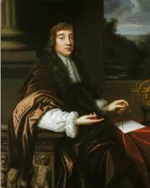
| Robert Hooke | 1665 | Coined 'cell' (dead cork) |
| Leeuwenhoek | 1674 | First saw living cells |
| Robert Brown | 1831 | Discovered nucleus |
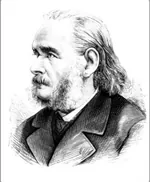
| Schleiden | 1838 | All plants are cells |
| Schwann | 1839 | All animals are cells |
| Virchow | 1855 | Cells from pre-existing cells |
Robert Hooke 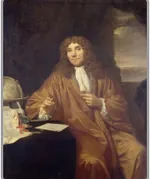
A. van Leeuwenhoek
Check yourself
History & Discovery of the Cell
- The cell was discovered only after the microscope was invented.
- Robert Brown (1831) discovered the nucleus.
- Purkinje coined the term protoplasm for the living substance of the cell.
- Robert Hooke — 1665 — Coined 'cell' (dead cork)
- Leeuwenhoek — 1674 — First saw living cells
- Robert Brown — 1831 — Discovered nucleus
- Schleiden — 1838 — All plants are cells
- Schwann — 1839 — All animals are cells
- Virchow — 1855 — Cells from pre-existing cells
- Robert Hooke (1665) saw box-like rooms in dead cork and coined the word 'cell' in his book Micrographia; he saw only empty walls.
- Anton van Leeuwenhoek (1674) was the first to see living cells – bacteria, sperm, pond creatures.
The cell was discovered only after the was invented.
The cell was discovered only after the microscope was invented.
Robert Brown (1831) discovered the .
Robert Brown (1831) discovered the nucleus.
coined the term for the living substance of the cell.
Purkinje coined the term protoplasm for the living substance of the cell.
saw box-like rooms in dead cork and coined the word 'cell' in his book ; he saw only empty walls.
Robert Hooke (1665) saw box-like rooms in dead cork and coined the word 'cell' in his book Micrographia; he saw only empty walls.
was the first to see living cells – bacteria, sperm, pond creatures.
Anton van Leeuwenhoek (1674) was the first to see living cells – bacteria, sperm, pond creatures.
The Cell Theory
- Rudolf Virchow (1855) showed every cell arises from a pre-existing cell – Omnis cellula e cellula.
- Point 1: All living things are made of cells.
- Point 2: The cell is the basic unit of life.
- Point 3: Every cell comes from a pre-existing cell.
M. Schleiden 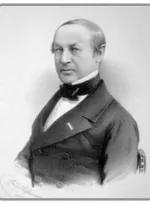
Theodor Schwann
Check yourself
The Cell Theory
- Rudolf Virchow (1855) showed every cell arises from a pre-existing cell – Omnis cellula e cellula.
- Point 1: All living things are made of cells.
- Point 2: The cell is the basic unit of life.
- Point 3: Every cell comes from a pre-existing cell.
- M. J. Schleiden (1838) stated all plants are made of cells.
- Theodor Schwann (1839) stated all animals are made of cells.
showed every cell arises from a pre-existing cell – .
Rudolf Virchow (1855) showed every cell arises from a pre-existing cell – Omnis cellula e cellula.
stated all are made of cells.
M. J. Schleiden (1838) stated all plants are made of cells.
stated all are made of cells.
Theodor Schwann (1839) stated all animals are made of cells.
Prokaryotic vs Eukaryotic Cells
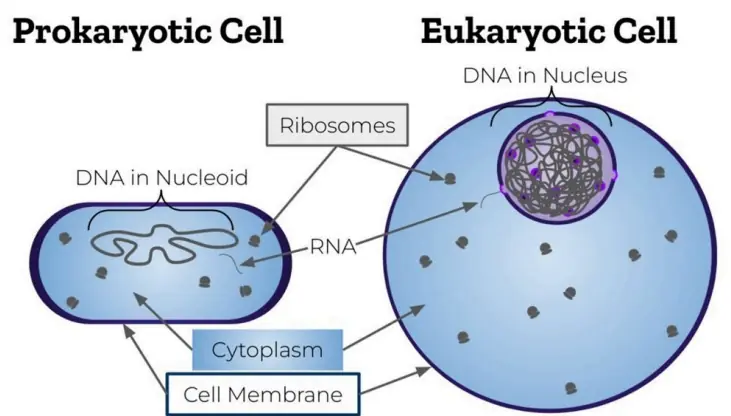
- A prokaryotic cell (pro = primitive) has no membranebound nucleus; its DNA lies naked in the cytoplasm.
- Examples: bacteria and blue-green algae (cyanobacteria).
- Prokaryotes have no membrane-bound organelles – no mitochondria or chloroplast, only ribosomes.
- Their membrane folds inward to form a mesosome, found only in prokaryotes.
- A eukaryotic cell (eu = true) has a true nucleus enclosed by a nuclear membrane.
- Eukaryotes: all plants, animals, fungi and protists.
- Many bacteria carry extra DNA rings called plasmids, which give antibiotic resistance and are used in genetic engineering.
| Feature | Prokaryotic | Eukaryotic |
|---|---|---|
| Nucleus | No membrane (naked DNA) | True, membrane-bound |
| Organelles | Absent | Present |
| Size | Small (1-10 µm) | Large (10-100 µm) |
| DNA | Single circular | Linear, many chromosomes |
| Examples | Bacteria, cyanobacteria | Plants, animals, fungi |
Check yourself
Prokaryotic vs Eukaryotic Cells
- A prokaryotic cell (pro = primitive) has no membranebound nucleus; its DNA lies naked in the cytoplasm.
- Examples: bacteria and blue-green algae (cyanobacteria).
- Prokaryotes have no membrane-bound organelles – no mitochondria or chloroplast, only ribosomes.
- Their membrane folds inward to form a mesosome, found only in prokaryotes.
- A eukaryotic cell (eu = true) has a true nucleus enclosed by a nuclear membrane.
- Eukaryotes: all plants, animals, fungi and protists.
- Many bacteria carry extra DNA rings called plasmids, which give antibiotic resistance and are used in genetic engineering.
- Nucleus — No membrane (naked DNA) — True, membrane-bound
- Organelles — Absent — Present
- Size — Small (1-10 µm) — Large (10-100 µm)
- DNA — Single circular — Linear, many chromosomes
- Examples — Bacteria, cyanobacteria — Plants, animals, fungi
A (pro = primitive) has ; its DNA lies naked in the cytoplasm.
A prokaryotic cell (pro = primitive) has no membranebound nucleus; its DNA lies naked in the cytoplasm.
Examples: bacteria and .
Examples: bacteria and blue-green algae (cyanobacteria).
Prokaryotes have – no mitochondria or chloroplast, only .
Prokaryotes have no membrane-bound organelles – no mitochondria or chloroplast, only ribosomes.
Their membrane folds inward to form a , found only in prokaryotes.
Their membrane folds inward to form a mesosome, found only in prokaryotes.
A (eu = true) has a enclosed by a nuclear membrane.
A eukaryotic cell (eu = true) has a true nucleus enclosed by a nuclear membrane.
Many bacteria carry extra DNA rings called , which give antibiotic resistance and are used in genetic engineering.
Many bacteria carry extra DNA rings called plasmids, which give antibiotic resistance and are used in genetic engineering.
Plant Cell vs Animal Cell
- Both are eukaryotic and share nucleus, cytoplasm, mitochondria, ribosomes, ER, Golgi and cell membrane.
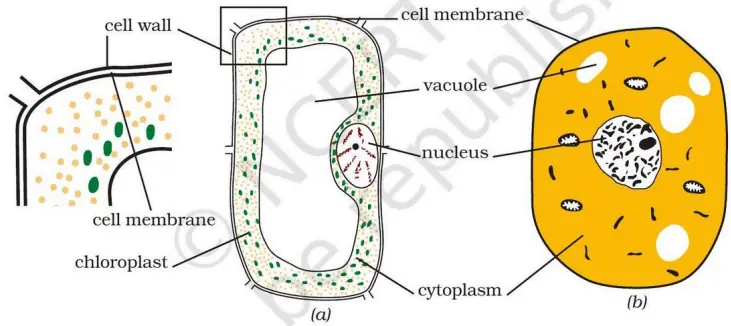
- A plant cell has a rigid cell wall of cellulose outside the membrane.
- Plant cells have green chloroplasts for photosynthesis and one large central vacuole.
- An animal cell has no cell wall, no chloroplast and only small or no vacuoles.
- Animal cells have a centriole that helps in cell division.
- Plant cells keep a fixed box-like shape; animal cells take many shapes.
| Feature | Plant Cell | Animal Cell |
|---|---|---|
| Cell wall | Present (cellulose) | Absent |
| Chloroplast | Present | Absent |
| Vacuole | One large central | Small or absent |
| Centriole | Absent | Present |
| Shape | Fixed, box-like | Variable |
Check yourself
Plant Cell vs Animal Cell
- Both are eukaryotic and share nucleus, cytoplasm, mitochondria, ribosomes, ER, Golgi and cell membrane.
- A plant cell has a rigid cell wall of cellulose outside the membrane.
- Plant cells have green chloroplasts for photosynthesis and one large central vacuole.
- An animal cell has no cell wall, no chloroplast and only small or no vacuoles.
- Animal cells have a centriole that helps in cell division.
- Plant cells keep a fixed box-like shape; animal cells take many shapes.
- Cell wall — Present (cellulose) — Absent
- Chloroplast — Present — Absent
- Vacuole — One large central — Small or absent
- Centriole — Absent — Present
- Shape — Fixed, box-like — Variable
Both are and share nucleus, cytoplasm, mitochondria, ribosomes, ER, Golgi and cell membrane.
Both are eukaryotic and share nucleus, cytoplasm, mitochondria, ribosomes, ER, Golgi and cell membrane.
A has a rigid of cellulose outside the membrane.
A plant cell has a rigid cell wall of cellulose outside the membrane.
Plant cells have green for photosynthesis and one .
Plant cells have green chloroplasts for photosynthesis and one large central vacuole.
An has , no chloroplast and only small or no vacuoles.
An animal cell has no cell wall, no chloroplast and only small or no vacuoles.
Animal cells have a that helps in cell division.
Animal cells have a centriole that helps in cell division.
Cell Membrane & Cell Wall
- The cell membrane (plasma membrane) is the thin living skin around every cell.
- It is selectively permeable – a gatekeeper letting in food and oxygen and pushing out waste.
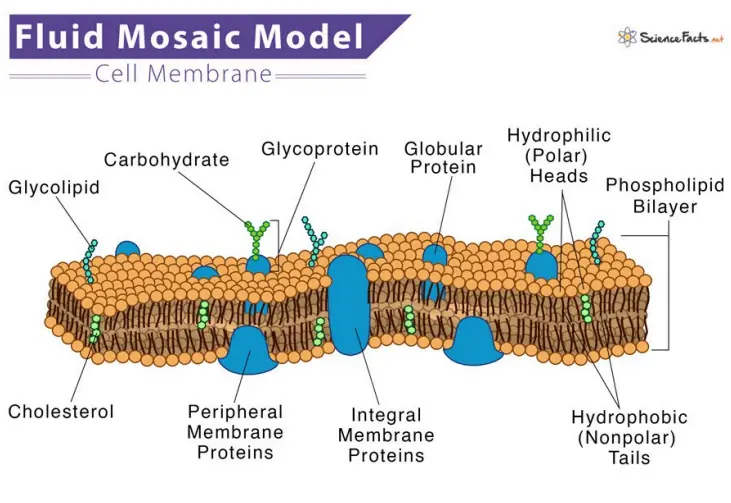
- Chemically the membrane is made of a lipid bilayer with proteins (lipids and proteins).
- The cell wall is a non-living, rigid covering in plants, fungi and bacteria, outside the membrane.
- In plants it is made mainly of cellulose and gives shape and protection.
- The young, flexible primary wall forms first; a tougher secondary wall is added inside as the cell matures.
Check yourself
Cell Membrane & Cell Wall
- The cell membrane (plasma membrane) is the thin living skin around every cell.
- It is selectively permeable – a gatekeeper letting in food and oxygen and pushing out waste.
- Chemically the membrane is made of a lipid bilayer with proteins (lipids and proteins).
- The cell wall is a non-living, rigid covering in plants, fungi and bacteria, outside the membrane.
- In plants it is made mainly of cellulose and gives shape and protection.
- The young, flexible primary wall forms first; a tougher secondary wall is added inside as the cell matures.
The is the thin living skin around every cell.
The cell membrane (plasma membrane) is the thin living skin around every cell.
It is – a gatekeeper letting in food and oxygen and pushing out waste.
It is selectively permeable – a gatekeeper letting in food and oxygen and pushing out waste.
Chemically the membrane is made of a (lipids and proteins).
Chemically the membrane is made of a lipid bilayer with proteins (lipids and proteins).
The is a non-living, rigid covering in plants, fungi and bacteria, outside the membrane.
The cell wall is a non-living, rigid covering in plants, fungi and bacteria, outside the membrane.
In plants it is made mainly of and gives shape and protection.
In plants it is made mainly of cellulose and gives shape and protection.
The young, flexible forms first; a tougher is added inside as the cell matures.
The young, flexible primary wall forms first; a tougher secondary wall is added inside as the cell matures.
Fluid Mosaic Model of the Membrane
- The structure of the membrane is explained by the Fluid Mosaic Model (Singer & Nicolson, 1972).
- It has a phospholipid bilayer with hydrophilic heads outside and hydrophobic tails inside.
- Proteins float in or across this layer like a mosaic of tiles.
- 'Fluid' means the lipids and proteins can move sideways, giving the membrane flexibility.
- Cholesterol in animal membranes keeps them stable.
Check yourself
Fluid Mosaic Model of the Membrane
- The structure of the membrane is explained by the Fluid Mosaic Model (Singer & Nicolson, 1972).
- It has a phospholipid bilayer with hydrophilic heads outside and hydrophobic tails inside.
- Proteins float in or across this layer like a mosaic of tiles.
- 'Fluid' means the lipids and proteins can move sideways, giving the membrane flexibility.
- Cholesterol in animal membranes keeps them stable.
The structure of the membrane is explained by the (Singer & Nicolson, 1972).
The structure of the membrane is explained by the Fluid Mosaic Model (Singer & Nicolson, 1972).
It has a with hydrophilic heads outside and hydrophobic tails inside.
It has a phospholipid bilayer with hydrophilic heads outside and hydrophobic tails inside.
in or across this layer like a mosaic of tiles.
Proteins float in or across this layer like a mosaic of tiles.
'Fluid' means the lipids and proteins can , giving the membrane flexibility.
'Fluid' means the lipids and proteins can move sideways, giving the membrane flexibility.
in animal membranes keeps them stable.
Cholesterol in animal membranes keeps them stable.
The Nucleus – Control Centre
- The nucleus is the brain or control centre directing all cell activities.
- It stores the instruction manual of life – the genes (DNA).
- It is wrapped in a double-layered nuclear envelope dotted with nuclear pores for transport.
- Inside is the nucleolus, which makes ribosomes.
- DNA winds with protein into thread-like chromatin, which condenses into chromosomes during division.
- Humans have 46 chromosomes (23 pairs).
Check yourself
The Nucleus – Control Centre
- The nucleus is the brain or control centre directing all cell activities.
- It stores the instruction manual of life – the genes (DNA).
- It is wrapped in a double-layered nuclear envelope dotted with nuclear pores for transport.
- Inside is the nucleolus, which makes ribosomes.
- DNA winds with protein into thread-like chromatin, which condenses into chromosomes during division.
- Humans have 46 chromosomes (23 pairs).
The is the brain or control centre directing all cell activities.
The nucleus is the brain or control centre directing all cell activities.
It stores the instruction manual of life – the .
It stores the instruction manual of life – the genes (DNA).
It is wrapped in a double-layered dotted with for transport.
It is wrapped in a double-layered nuclear envelope dotted with nuclear pores for transport.
Inside is the , which makes .
Inside is the nucleolus, which makes ribosomes.
DNA winds with protein into thread-like , which condenses into during division.
DNA winds with protein into thread-like chromatin, which condenses into chromosomes during division.
Cytoplasm & Energy Organelles
- Cytoplasm is the jelly-like fluid filling the cell where organelles float and reactions occur.
- Mitochondria are the powerhouse of the cell, making energy as ATP through respiration.
- Mitochondria have their own DNA, can self-replicate, and have a folded inner membrane (cristae).
- Chloroplasts contain chlorophyll and convert solar energy into food (and ATP) by photosynthesis.
- Chloroplasts also have their own DNA, which qualifies them for self-replication.
- Mitochondria and chloroplasts are called semiautonomous organelles.
Check yourself
Cytoplasm & Energy Organelles
- Cytoplasm is the jelly-like fluid filling the cell where organelles float and reactions occur.
- Mitochondria are the powerhouse of the cell, making energy as ATP through respiration.
- Mitochondria have their own DNA, can self-replicate, and have a folded inner membrane (cristae).
- Chloroplasts contain chlorophyll and convert solar energy into food (and ATP) by photosynthesis.
- Chloroplasts also have their own DNA, which qualifies them for self-replication.
- Mitochondria and chloroplasts are called semiautonomous organelles.
is the jelly-like fluid filling the cell where organelles float and reactions occur.
Cytoplasm is the jelly-like fluid filling the cell where organelles float and reactions occur.
are the , making energy as through respiration.
Mitochondria are the powerhouse of the cell, making energy as ATP through respiration.
Mitochondria have their , can self-replicate, and have a folded inner membrane (cristae).
Mitochondria have their own DNA, can self-replicate, and have a folded inner membrane (cristae).
contain and convert by photosynthesis.
Chloroplasts contain chlorophyll and convert solar energy into food (and ATP) by photosynthesis.
Chloroplasts also have their , which qualifies them for self-replication.
Chloroplasts also have their own DNA, which qualifies them for self-replication.
Mitochondria and chloroplasts are called .
Mitochondria and chloroplasts are called semiautonomous organelles.
Other Cell Organelles
- Ribosomes are the site of protein synthesis; they are the only organelle in prokaryotes.
- The Endoplasmic Reticulum (ER) is a network of tubes; rough ER (with ribosomes) makes proteins, smooth ER makes fats.
- The Golgi apparatus packages, modifies and dispatches materials, like a post office.
- Lysosomes are the suicide bags with digestive enzymes that clear waste and worn-out parts.
- Vacuoles store water, food and waste; large in plant cells.
- Centriole/centrosome (animal cells) organises fibres during cell division.
| Organelle | Main Function |
|---|---|
| Ribosome | Protein synthesis |
| Rough ER | Makes proteins |
| Smooth ER | Makes fats/lipids |
| Golgi body | Packaging & dispatch |
| Lysosome | Digestion (suicide bag) |
| Vacuole | Storage |
Check yourself
Other Cell Organelles
- Ribosomes are the site of protein synthesis; they are the only organelle in prokaryotes.
- The Endoplasmic Reticulum (ER) is a network of tubes; rough ER (with ribosomes) makes proteins, smooth ER makes fats.
- The Golgi apparatus packages, modifies and dispatches materials, like a post office.
- Lysosomes are the suicide bags with digestive enzymes that clear waste and worn-out parts.
- Vacuoles store water, food and waste; large in plant cells.
- Centriole/centrosome (animal cells) organises fibres during cell division.
- Ribosome — Protein synthesis
- Rough ER — Makes proteins
- Smooth ER — Makes fats/lipids
- Golgi body — Packaging & dispatch
- Lysosome — Digestion (suicide bag)
- Vacuole — Storage
are the site of ; they are the only organelle in prokaryotes.
Ribosomes are the site of protein synthesis; they are the only organelle in prokaryotes.
The is a network of tubes; (with ribosomes) makes proteins, makes fats.
The Endoplasmic Reticulum (ER) is a network of tubes; rough ER (with ribosomes) makes proteins, smooth ER makes fats.
The packages, modifies and dispatches materials, like a post office.
The Golgi apparatus packages, modifies and dispatches materials, like a post office.
are the with digestive enzymes that clear waste and worn-out parts.
Lysosomes are the suicide bags with digestive enzymes that clear waste and worn-out parts.
store water, food and waste; large in plant cells.
Vacuoles store water, food and waste; large in plant cells.
(animal cells) organises fibres during cell division.
Centriole/centrosome (animal cells) organises fibres during cell division.
Viruses – Living or Non-living?
- A virus is on the borderline of living and non-living – it is acellular (not a true cell).
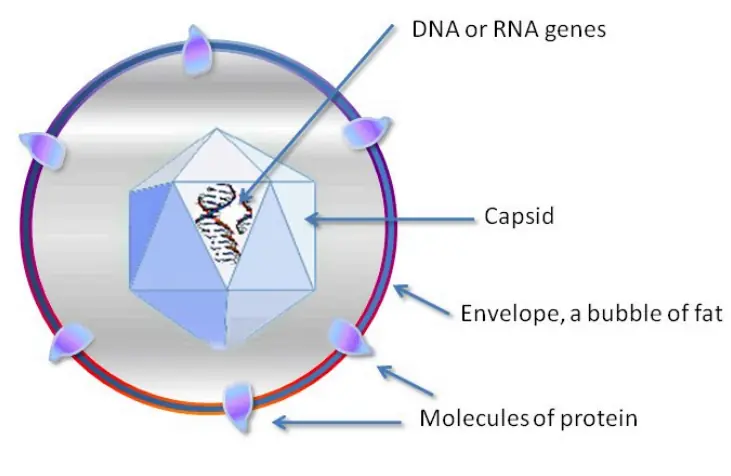
- It is made of a nucleic acid core (DNA or RNA) inside a protein coat (capsid).
- Viruses have no enzymes and no cell machinery of their own.
- Outside a host they behave like non-living crystals; inside a host cell they reproduce.
- They are an obligate intracellular parasite, depending fully on a host cell.
- Examples of viral diseases: COVID-19, influenza, AIDS, polio.
Check yourself
Viruses – Living or Non-living?
- A virus is on the borderline of living and non-living – it is acellular (not a true cell).
- It is made of a nucleic acid core (DNA or RNA) inside a protein coat (capsid).
- Viruses have no enzymes and no cell machinery of their own.
- Outside a host they behave like non-living crystals; inside a host cell they reproduce.
- They are an obligate intracellular parasite, depending fully on a host cell.
- Examples of viral diseases: COVID-19, influenza, AIDS, polio.
A is on the borderline of living and non-living – it is (not a true cell).
A virus is on the borderline of living and non-living – it is acellular (not a true cell).
Outside a host they behave like ; inside a host cell they reproduce.
Outside a host they behave like non-living crystals; inside a host cell they reproduce.
They are an obligate , depending fully on a host cell.
They are an obligate intracellular parasite, depending fully on a host cell.
Quick Facts & Exam Points
- The cell membrane is composed of lipids and proteins (biological membranes).
- Solar energy is converted into ATP in the chloroplast.
- Viruses have no enzymes in them.
- The largest cell is the ostrich egg; the longest cell is the nerve cell (neuron).
- The smallest cell is the bacterium Mycoplasma (PPLO).
- Human RBCs and sieve tube cells lack a nucleus when mature.
Check yourself
Quick Facts & Exam Points
- The cell membrane is composed of lipids and proteins (biological membranes).
- Solar energy is converted into ATP in the chloroplast.
- Viruses have no enzymes in them.
- The largest cell is the ostrich egg; the longest cell is the nerve cell (neuron).
- The smallest cell is the bacterium Mycoplasma (PPLO).
- Human RBCs and sieve tube cells lack a nucleus when mature.
The is the ostrich egg; the is the nerve cell (neuron).
The largest cell is the ostrich egg; the longest cell is the nerve cell (neuron).
The is the bacterium .
The smallest cell is the bacterium Mycoplasma (PPLO).
All 19 chapters of Biology notes
- Cell: Structure & Function12 sections
- Biomolecules & DNA/RNA11 sections
- Plant Kingdom & Classification11 sections
- Plant Tissues & Anatomy12 sections
- Plant Physiology: Photosynthesis, Respiration & Nutrition14 sections
- Animal Kingdom, Morphology & Classification16 sections
- Nutrition & Digestive System12 sections
- Circulatory System & Body Fluids12 sections
- Respiratory System10 sections
- Excretory System12 sections
- Nervous System & Sense Organs12 sections
- Endocrine System & Hormones14 sections
- Skeletal & Muscular System12 sections
- Reproductive System & Reproductive Health12 sections
- Genetics & Evolution13 sections
- Human Health, Diseases & Immunity16 sections
- Ecology, Ecosystem & Biodiversity12 sections
- Biology in Everyday Life & Applied Biology12 sections
- Inventions, Discoveries & Scientists10 sections