Biology notes · Chapter 18 of 19
Biology in Everyday Life & Applied Biology
12 sections, 74 flashcards. Open a card to check your answer, or revise them in the app with spaced revision.
Microbes – The Big Idea
- A microbe (micro-organism) is a tiny living thing seen only under a microscope.
- Main groups are bacteria, fungi, yeast and protozoa.
- The key lesson: not all microbes are harmful – most are useful.
- Useful microbes make curd, bread, antibiotics and biogas.
- Harmful microbes cause disease and are called pathogens.
- Microbes are nature's decomposers, recycling dead matter into soil nutrients.
Check yourself
Microbes – The Big Idea
- A microbe (micro-organism) is a tiny living thing seen only under a microscope.
- Main groups are bacteria, fungi, yeast and protozoa.
- The key lesson: not all microbes are harmful – most are useful.
- Useful microbes make curd, bread, antibiotics and biogas.
- Harmful microbes cause disease and are called pathogens.
- Microbes are nature's decomposers, recycling dead matter into soil nutrients.
A is a tiny living thing seen only under a microscope.
A microbe (micro-organism) is a tiny living thing seen only under a microscope.
Harmful microbes cause disease and are called .
Harmful microbes cause disease and are called pathogens.
Microbes are nature's , recycling dead matter into soil nutrients.
Microbes are nature's decomposers, recycling dead matter into soil nutrients.
Fermentation
- Fermentation is microbes breaking down sugars without enough oxygen.
- It produces simpler substances like alcohol or acid and releases gas (often CO2).
- The spongy texture of idli, dosa and bread comes from trapped CO2 gas.
- Yeast ferments sugars into ethanol (alcohol) and CO2.
- Yeast reproduces by budding – a small bud grows out and breaks off as a new cell.
- Lactobacillus ferments milk into curd and adds vitamin B12.
Check yourself
Fermentation
- Fermentation is microbes breaking down sugars without enough oxygen.
- It produces simpler substances like alcohol or acid and releases gas (often CO2).
- The spongy texture of idli, dosa and bread comes from trapped CO2 gas.
- Yeast ferments sugars into ethanol (alcohol) and CO2.
- Yeast reproduces by budding – a small bud grows out and breaks off as a new cell.
- Lactobacillus ferments milk into curd and adds vitamin B12.
is microbes breaking down sugars without enough oxygen.
Fermentation is microbes breaking down sugars without enough oxygen.
It produces simpler substances like and releases gas (often CO2).
It produces simpler substances like alcohol or acid and releases gas (often CO2).
The spongy texture of idli, dosa and bread comes from trapped .
The spongy texture of idli, dosa and bread comes from trapped CO2 gas.
Yeast ferments sugars into .
Yeast ferments sugars into ethanol (alcohol) and CO2.
Yeast reproduces by – a small bud grows out and breaks off as a new cell.
Yeast reproduces by budding – a small bud grows out and breaks off as a new cell.
ferments milk into curd and adds .
Lactobacillus ferments milk into curd and adds vitamin B12.
Common Fermented Products & Microbes
- Match each food with the microbe that makes it – a favourite exam trap.
- Baker's yeast and brewer's yeast are the same species, Saccharomyces cerevisiae.
- Swiss cheese holes are CO2 bubbles made by Propionibacterium.
- Roquefort cheese gets its flavour from a fungus grown on it.
| Product | Microbe used |
|---|---|
| Curd | Lactobacillus (bacteria) |
| Bread | Saccharomyces cerevisiae (yeast) |
| Ethanol / wine / beer | Saccharomyces cerevisiae |
| Toddy | Yeast (fermented palm sap) |
| Swiss cheese | Propionibacterium |
| Roquefort cheese | Fungus (Penicillium) |
Check yourself
Common Fermented Products & Microbes
- Match each food with the microbe that makes it – a favourite exam trap.
- Baker's yeast and brewer's yeast are the same species, Saccharomyces cerevisiae.
- Swiss cheese holes are CO2 bubbles made by Propionibacterium.
- Roquefort cheese gets its flavour from a fungus grown on it.
- Curd — Lactobacillus (bacteria)
- Bread — Saccharomyces cerevisiae (yeast)
- Ethanol / wine / beer — Saccharomyces cerevisiae
- Toddy — Yeast (fermented palm sap)
- Swiss cheese — Propionibacterium
- Roquefort cheese — Fungus (Penicillium)
are the same species, Saccharomyces cerevisiae.
Baker's yeast and brewer's yeast are the same species, Saccharomyces cerevisiae.
Swiss cheese holes are made by Propionibacterium.
Swiss cheese holes are CO2 bubbles made by Propionibacterium.
Roquefort cheese gets its flavour from a grown on it.
Roquefort cheese gets its flavour from a fungus grown on it.
Alcoholic Drinks – Distilled vs Not
- All alcoholic drinks begin with fermentation of sugars.
- Wine and beer are made WITHOUT distillation.
- Whisky, brandy and rum are made WITH distillation of the fermented liquid.
- Distillation increases the alcohol concentration.
| Drink | Distilled? |
|---|---|
| Wine, Beer | No |
| Whisky, Brandy, Rum | Yes |
Check yourself
Alcoholic Drinks – Distilled vs Not
- All alcoholic drinks begin with fermentation of sugars.
- Wine and beer are made WITHOUT distillation.
- Whisky, brandy and rum are made WITH distillation of the fermented liquid.
- Distillation increases the alcohol concentration.
- Wine, Beer — No
- Whisky, Brandy, Rum — Yes
All alcoholic drinks begin with of sugars.
All alcoholic drinks begin with fermentation of sugars.
are made WITHOUT distillation.
Wine and beer are made WITHOUT distillation.
are made WITH distillation of the fermented liquid.
Whisky, brandy and rum are made WITH distillation of the fermented liquid.
Antibiotics – Medicines from Microbes
- An antibiotic is a chemical made by microbes that kills or stops other microbes.
- Fleming named it after the mould Penicillium notatum.
- Chain and Florey developed it into a medicine; the three shared the 1945 Nobel Prize.
- Antibiotics cured once-deadly diseases like plague, diphtheria, whooping cough and leprosy.
- Crucial point: antibiotics work on bacteria and fungi, NOT viruses – so they cannot cure cold or flu.
| Antibiotic | Microbial source |
|---|---|
| Penicillin | Penicillium (fungus) |
| Streptomycin | Streptomyces (bacteria) |
| Tetracycline | Streptomyces |
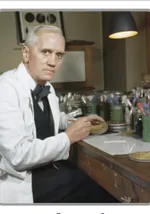
A. Fleming
Check yourself
Antibiotics – Medicines from Microbes
- An antibiotic is a chemical made by microbes that kills or stops other microbes.
- Fleming named it after the mould Penicillium notatum.
- Chain and Florey developed it into a medicine; the three shared the 1945 Nobel Prize.
- Antibiotics cured once-deadly diseases like plague, diphtheria, whooping cough and leprosy.
- Crucial point: antibiotics work on bacteria and fungi, NOT viruses – so they cannot cure cold or flu.
- Penicillin — Penicillium (fungus)
- Streptomycin — Streptomyces (bacteria)
- Tetracycline — Streptomyces
- Penicillin was the first antibiotic, discovered accidentally by Alexander Fleming in 1928.
An is a chemical made by microbes that kills or stops other microbes.
An antibiotic is a chemical made by microbes that kills or stops other microbes.
Fleming named it after the mould .
Fleming named it after the mould Penicillium notatum.
developed it into a medicine; the three shared the 1945 Nobel Prize.
Chain and Florey developed it into a medicine; the three shared the 1945 Nobel Prize.
Crucial point: antibiotics work on – so they cannot cure cold or flu.
Crucial point: antibiotics work on bacteria and fungi, NOT viruses – so they cannot cure cold or flu.
was the first antibiotic, discovered accidentally by Alexander Fleming in 1928.
Penicillin was the first antibiotic, discovered accidentally by Alexander Fleming in 1928.
Drugs & Products from Plants
- Many drugs come straight from plants – exams test which plant part gives the drug.
- Quinine, the anti-malaria drug, comes from the stem bark of Cinchona tree.
- Quinine works by attacking the malaria parasite inside red blood cells.
- Tulsi has medicinal value due to eugenol (an essential oil).
- Turmeric powder comes from the rhizome (underground stem); its compound is curcumin.
- Pungency (hotness) of chillies is due to capsaicin.
| Product | Plant | Part used |
|---|---|---|
| Quinine | Cinchona | Stem bark |
| Opium | Poppy | Latex of fruit |
| Hing (Asafoetida) | Ferula | Root |
| Rubber | Hevea | Latex (bark) |
| Turmeric | Curcuma | Rhizome (stem) |
| Ginger | Zingiber | Rhizome (stem) |
Check yourself
Drugs & Products from Plants
- Many drugs come straight from plants – exams test which plant part gives the drug.
- Quinine, the anti-malaria drug, comes from the stem bark of Cinchona tree.
- Quinine works by attacking the malaria parasite inside red blood cells.
- Tulsi has medicinal value due to eugenol (an essential oil).
- Turmeric powder comes from the rhizome (underground stem); its compound is curcumin.
- Pungency (hotness) of chillies is due to capsaicin.
- Quinine — Cinchona — Stem bark
- Opium — Poppy — Latex of fruit
- Hing (Asafoetida) — Ferula — Root
- Rubber — Hevea — Latex (bark)
- Turmeric — Curcuma — Rhizome (stem)
- Ginger — Zingiber — Rhizome (stem)
Many drugs come straight from plants – exams test gives the drug.
Many drugs come straight from plants – exams test which plant part gives the drug.
, the anti-malaria drug, comes from the tree.
Quinine, the anti-malaria drug, comes from the stem bark of Cinchona tree.
has medicinal value due to (an essential oil).
Tulsi has medicinal value due to eugenol (an essential oil).
powder comes from the ; its compound is curcumin.
Turmeric powder comes from the rhizome (underground stem); its compound is curcumin.
Pungency (hotness) of chillies is due to .
Pungency (hotness) of chillies is due to capsaicin.
Vaccines & Immunisation
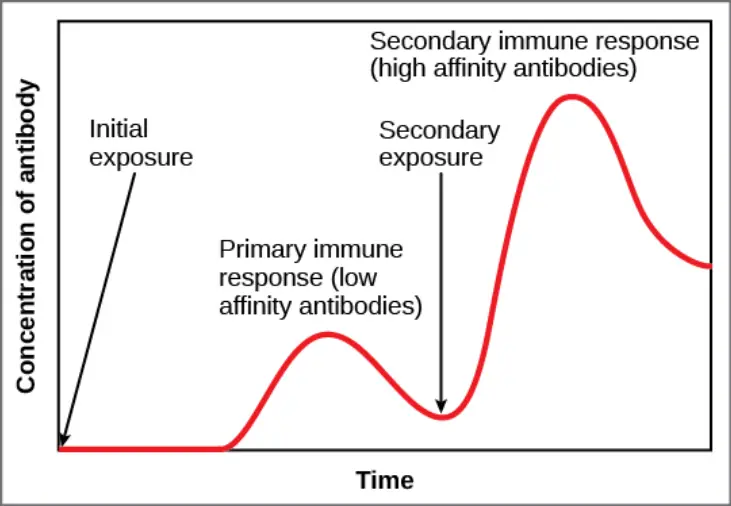
- A vaccine is weakened or killed germs (or their proteins) put into the body to train immunity.
- It works like a practice fight – the body learns the germ and builds memory.
- Vaccination makes memory B-cells and T-cells plus protective antibodies.
- Smallpox has been completely eradicated by vaccination.
- Polio, diphtheria, pneumonia and tetanus are largely controlled.
- For fast poisons (tetanus, snakebite) ready-made antibodies called antitoxin are injected directly.
- The Hepatitis B vaccine is a recombinant DNA vaccine made in yeast.
Check yourself
Vaccines & Immunisation
- A vaccine is weakened or killed germs (or their proteins) put into the body to train immunity.
- It works like a practice fight – the body learns the germ and builds memory.
- Vaccination makes memory B-cells and T-cells plus protective antibodies.
- Smallpox has been completely eradicated by vaccination.
- Polio, diphtheria, pneumonia and tetanus are largely controlled.
- For fast poisons (tetanus, snakebite) ready-made antibodies called antitoxin are injected directly.
- The Hepatitis B vaccine is a recombinant DNA vaccine made in yeast.
A is weakened or killed germs (or their proteins) put into the body to train immunity.
A vaccine is weakened or killed germs (or their proteins) put into the body to train immunity.
It works like a – the body learns the germ and builds memory.
It works like a practice fight – the body learns the germ and builds memory.
Vaccination makes plus protective .
Vaccination makes memory B-cells and T-cells plus protective antibodies.
has been completely eradicated by vaccination.
Smallpox has been completely eradicated by vaccination.
Polio, diphtheria, pneumonia and tetanus are .
Polio, diphtheria, pneumonia and tetanus are largely controlled.
For fast poisons (tetanus, snakebite) ready-made antibodies called are injected directly.
For fast poisons (tetanus, snakebite) ready-made antibodies called antitoxin are injected directly.
The is a recombinant DNA vaccine made in yeast.
The Hepatitis B vaccine is a recombinant DNA vaccine made in yeast.
Biotechnology
- Biotechnology uses living organisms or their enzymes to make useful products.
- Broadly, even making curd, bread and wine is biotechnology.
- Modern usage means using genetically modified (GM) organisms by changing their genes.
- Examples: test-tube baby (IVF), DNA vaccines, and gene therapy.
- Gene therapy means correcting a defective gene.
- GM crops give higher yield, resist pests, tolerate drought/salt and improve nutrition.
- Pest-resistant crops need less spraying, so they reduce chemical pesticide use.
Check yourself
Biotechnology
- Biotechnology uses living organisms or their enzymes to make useful products.
- Broadly, even making curd, bread and wine is biotechnology.
- Modern usage means using genetically modified (GM) organisms by changing their genes.
- Examples: test-tube baby (IVF), DNA vaccines, and gene therapy.
- Gene therapy means correcting a defective gene.
- GM crops give higher yield, resist pests, tolerate drought/salt and improve nutrition.
- Pest-resistant crops need less spraying, so they reduce chemical pesticide use.
uses living organisms or their enzymes to make useful products.
Biotechnology uses living organisms or their enzymes to make useful products.
Broadly, even making is biotechnology.
Broadly, even making curd, bread and wine is biotechnology.
Modern usage means using organisms by changing their genes.
Modern usage means using genetically modified (GM) organisms by changing their genes.
Examples: , DNA vaccines, and gene therapy.
Examples: test-tube baby (IVF), DNA vaccines, and gene therapy.
means correcting a defective gene.
Gene therapy means correcting a defective gene.
give higher yield, resist pests, tolerate drought/salt and improve nutrition.
GM crops give higher yield, resist pests, tolerate drought/salt and improve nutrition.
Pest-resistant crops need less spraying, so they .
Pest-resistant crops need less spraying, so they reduce chemical pesticide use.
Microbes in Sewage, Biogas & Biocontrol
- Microbes are nature's cleaners and recyclers of waste.
- In sewage treatment, bacteria break down organic matter in dirty water.
- Biogas is produced when bacteria decompose waste without oxygen (anaerobic).
- The main gas in biogas is methane (CH4); the methane producers are methanogens.
- Gobar gas uses cow dung as the raw material for biogas.
- Biofertilisers (like Rhizobium, blue-green algae) naturally enrich soil with nitrogen.
- Biocontrol uses living organisms instead of chemicals to control pests.
Check yourself
Microbes in Sewage, Biogas & Biocontrol
- Microbes are nature's cleaners and recyclers of waste.
- In sewage treatment, bacteria break down organic matter in dirty water.
- Biogas is produced when bacteria decompose waste without oxygen (anaerobic).
- The main gas in biogas is methane (CH4); the methane producers are methanogens.
- Gobar gas uses cow dung as the raw material for biogas.
- Biofertilisers (like Rhizobium, blue-green algae) naturally enrich soil with nitrogen.
- Biocontrol uses living organisms instead of chemicals to control pests.
Microbes are nature's of waste.
Microbes are nature's cleaners and recyclers of waste.
In , bacteria break down organic matter in dirty water.
In sewage treatment, bacteria break down organic matter in dirty water.
is produced when bacteria decompose waste without oxygen (anaerobic).
Biogas is produced when bacteria decompose waste without oxygen (anaerobic).
The main gas in biogas is ; the methane producers are methanogens.
The main gas in biogas is methane (CH4); the methane producers are methanogens.
uses cow dung as the raw material for biogas.
Gobar gas uses cow dung as the raw material for biogas.
(like Rhizobium, blue-green algae) naturally enrich soil with nitrogen.
Biofertilisers (like Rhizobium, blue-green algae) naturally enrich soil with nitrogen.
uses living organisms instead of chemicals to control pests.
Biocontrol uses living organisms instead of chemicals to control pests.
Biodegradable Waste & Vermiculture
- Biodegradable waste is matter that microbes can break down naturally.
- Microbes convert biodegradable waste into useful compost / manure.
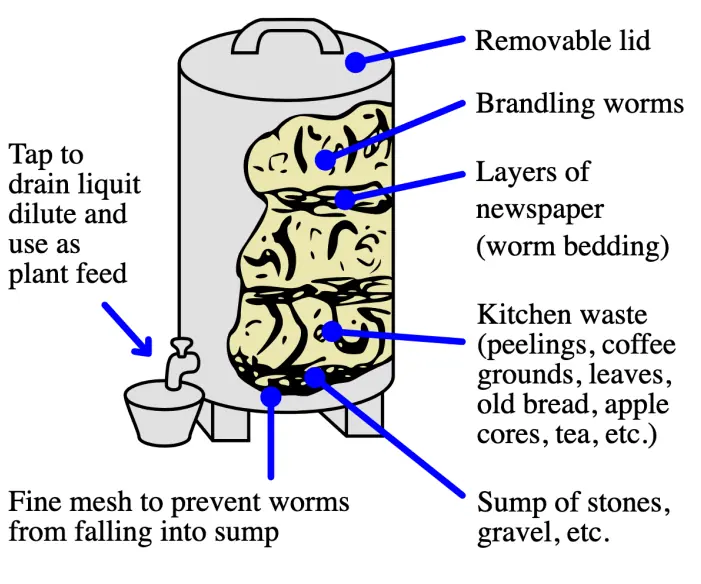
- Vermiculture is rearing earthworms to convert organic waste into compost.
- The product of vermiculture is vermicompost, a rich natural fertiliser.
- Non-biodegradable wastes like plastic do not decay and cause pollution.
Check yourself
Biodegradable Waste & Vermiculture
- Biodegradable waste is matter that microbes can break down naturally.
- Microbes convert biodegradable waste into useful compost / manure.
- Vermiculture is rearing earthworms to convert organic waste into compost.
- The product of vermiculture is vermicompost, a rich natural fertiliser.
- Non-biodegradable wastes like plastic do not decay and cause pollution.
is matter that microbes can break down naturally.
Biodegradable waste is matter that microbes can break down naturally.
Microbes convert biodegradable waste into .
Microbes convert biodegradable waste into useful compost / manure.
is rearing earthworms to convert organic waste into compost.
Vermiculture is rearing earthworms to convert organic waste into compost.
The product of vermiculture is , a rich natural fertiliser.
The product of vermiculture is vermicompost, a rich natural fertiliser.
wastes like plastic do not decay and cause pollution.
Non-biodegradable wastes like plastic do not decay and cause pollution.
Marine & Other Useful Organisms
- Seaweeds (marine algae) are an important source of iodine and agar.
- Seaweeds also yield algin and carrageenan, used as food thickeners.
- Light emitted by some marine animals and insects in darkness is bioluminescence.
- Bioluminescence is produced by the enzyme luciferase acting on luciferin.
- The painkiller diclofenac given to cattle nearly wiped out India's vultures.
Check yourself
Marine & Other Useful Organisms
- Seaweeds (marine algae) are an important source of iodine and agar.
- Seaweeds also yield algin and carrageenan, used as food thickeners.
- Light emitted by some marine animals and insects in darkness is bioluminescence.
- Bioluminescence is produced by the enzyme luciferase acting on luciferin.
- The painkiller diclofenac given to cattle nearly wiped out India's vultures.
are an important source of .
Seaweeds (marine algae) are an important source of iodine and agar.
Seaweeds also yield , used as food thickeners.
Seaweeds also yield algin and carrageenan, used as food thickeners.
Light emitted by some marine animals and insects in darkness is .
Light emitted by some marine animals and insects in darkness is bioluminescence.
Bioluminescence is produced by the enzyme acting on luciferin.
Bioluminescence is produced by the enzyme luciferase acting on luciferin.
The painkiller given to cattle nearly wiped out India's .
The painkiller diclofenac given to cattle nearly wiped out India's vultures.
Everyday Body & Plant Facts
- Blood groups A, B, AB and O are favourite exam topics.
- O group is the universal donor; AB group is the universal recipient.
- Hormones are chemical messengers controlling body functions (e.g. insulin, adrenaline).
- A true fruit develops only from the ovary; a false fruit includes other parts (e.g. apple).
- Stems grow above ground; some, like potato and ginger, are underground stems.
- Distinguishing true vs false fruit and stem vs root is a common BPSC question.
| Feature | True fruit | False fruit |
|---|---|---|
| Develops from | Ovary only | Ovary + other parts |
| Example | Mango | Apple, Pear |
Check yourself
Everyday Body & Plant Facts
- Blood groups A, B, AB and O are favourite exam topics.
- O group is the universal donor; AB group is the universal recipient.
- Hormones are chemical messengers controlling body functions (e.g. insulin, adrenaline).
- A true fruit develops only from the ovary; a false fruit includes other parts (e.g. apple).
- Stems grow above ground; some, like potato and ginger, are underground stems.
- Distinguishing true vs false fruit and stem vs root is a common BPSC question.
- Develops from — Ovary only — Ovary + other parts
- Example — Mango — Apple, Pear
A, B, AB and O are favourite exam topics.
Blood groups A, B, AB and O are favourite exam topics.
is the universal donor; is the universal recipient.
O group is the universal donor; AB group is the universal recipient.
are chemical messengers controlling body functions (e.g. insulin, adrenaline).
Hormones are chemical messengers controlling body functions (e.g. insulin, adrenaline).
A develops only from the ovary; a includes other parts (e.g. apple).
A true fruit develops only from the ovary; a false fruit includes other parts (e.g. apple).
grow above ground; some, like potato and ginger, are .
Stems grow above ground; some, like potato and ginger, are underground stems.
Distinguishing and stem vs root is a common BPSC question.
Distinguishing true vs false fruit and stem vs root is a common BPSC question.
All 19 chapters of Biology notes
- Cell: Structure & Function12 sections
- Biomolecules & DNA/RNA11 sections
- Plant Kingdom & Classification11 sections
- Plant Tissues & Anatomy12 sections
- Plant Physiology: Photosynthesis, Respiration & Nutrition14 sections
- Animal Kingdom, Morphology & Classification16 sections
- Nutrition & Digestive System12 sections
- Circulatory System & Body Fluids12 sections
- Respiratory System10 sections
- Excretory System12 sections
- Nervous System & Sense Organs12 sections
- Endocrine System & Hormones14 sections
- Skeletal & Muscular System12 sections
- Reproductive System & Reproductive Health12 sections
- Genetics & Evolution13 sections
- Human Health, Diseases & Immunity16 sections
- Ecology, Ecosystem & Biodiversity12 sections
- Biology in Everyday Life & Applied Biology12 sections
- Inventions, Discoveries & Scientists10 sections