Biology notes · Chapter 16 of 19
Human Health, Diseases & Immunity
16 sections, 88 flashcards. Open a card to check your answer, or revise them in the app with spaced revision.
Health and Disease: Basics
- Health is a state of complete physical, mental and social well-being, not merely absence of disease (WHO definition).
- Disease (dis-ease) is any condition where the body's normal working is disturbed, shown by symptoms like fever, pain or weakness.
- Infectious (communicable) diseases are caused by a germ and spread person-to-person, e.g. cholera, TB, AIDS.
- Non-infectious (non-communicable) diseases do not spread; they arise from inside the body, e.g. cancer, diabetes, scurvy.
- The germ that actually causes an infectious disease is called a pathogen.
- Normal human body temperature is 37 degrees C (98.6 degrees F).
Check yourself
Health and Disease: Basics
- Health is a state of complete physical, mental and social well-being, not merely absence of disease (WHO definition).
- Disease (dis-ease) is any condition where the body's normal working is disturbed, shown by symptoms like fever, pain or weakness.
- Infectious (communicable) diseases are caused by a germ and spread person-to-person, e.g. cholera, TB, AIDS.
- Non-infectious (non-communicable) diseases do not spread; they arise from inside the body, e.g. cancer, diabetes, scurvy.
- The germ that actually causes an infectious disease is called a pathogen.
- Normal human body temperature is 37 degrees C (98.6 degrees F).
is a state of complete physical, mental and social well-being, not merely absence of disease (WHO definition).
Health is a state of complete physical, mental and social well-being, not merely absence of disease (WHO definition).
(dis-ease) is any condition where the body's normal working is disturbed, shown by symptoms like fever, pain or weakness.
Disease (dis-ease) is any condition where the body's normal working is disturbed, shown by symptoms like fever, pain or weakness.
are caused by a germ and spread person-to-person, e.g. cholera, TB, AIDS.
Infectious (communicable) diseases are caused by a germ and spread person-to-person, e.g. cholera, TB, AIDS.
do not spread; they arise from inside the body, e.g. cancer, diabetes, scurvy.
Non-infectious (non-communicable) diseases do not spread; they arise from inside the body, e.g. cancer, diabetes, scurvy.
The germ that actually causes an infectious disease is called a .
The germ that actually causes an infectious disease is called a pathogen.
Types of Pathogens (Disease-Causing Germs)
- The five main pathogen groups are viruses, bacteria, fungi, protozoa and worms (helminths).
- Speed rule: viruses, bacteria and fungi multiply very fast, while worms multiply very slowly.
- All viruses live only inside host cells; bacteria can live and multiply outside cells.
- Key trap: antibiotics work against bacteria but NOT against viruses, because viruses lack the life processes antibiotics block.
| Pathogen | Example Diseases |
|---|---|
| Virus | Common cold, flu, dengue, polio, AIDS, hepatitis-B |
| Bacteria | Typhoid, cholera, TB, tetanus, anthrax, diphtheria |
| Fungi | Ringworm, athlete's foot, late blight of potato |
| Protozoa | Malaria (Plasmodium), kala-azar |
| Worms | Elephantiasis (filariasis), taeniasis (tapeworm) |
Check yourself
Types of Pathogens (Disease-Causing Germs)
- The five main pathogen groups are viruses, bacteria, fungi, protozoa and worms (helminths).
- Speed rule: viruses, bacteria and fungi multiply very fast, while worms multiply very slowly.
- All viruses live only inside host cells; bacteria can live and multiply outside cells.
- Key trap: antibiotics work against bacteria but NOT against viruses, because viruses lack the life processes antibiotics block.
- Virus — Common cold, flu, dengue, polio, AIDS, hepatitis-B
- Bacteria — Typhoid, cholera, TB, tetanus, anthrax, diphtheria
- Fungi — Ringworm, athlete's foot, late blight of potato
- Protozoa — Malaria (Plasmodium), kala-azar
- Worms — Elephantiasis (filariasis), taeniasis (tapeworm)
All ; bacteria can live and multiply outside cells.
All viruses live only inside host cells; bacteria can live and multiply outside cells.
Viruses: Structure and Key Facts
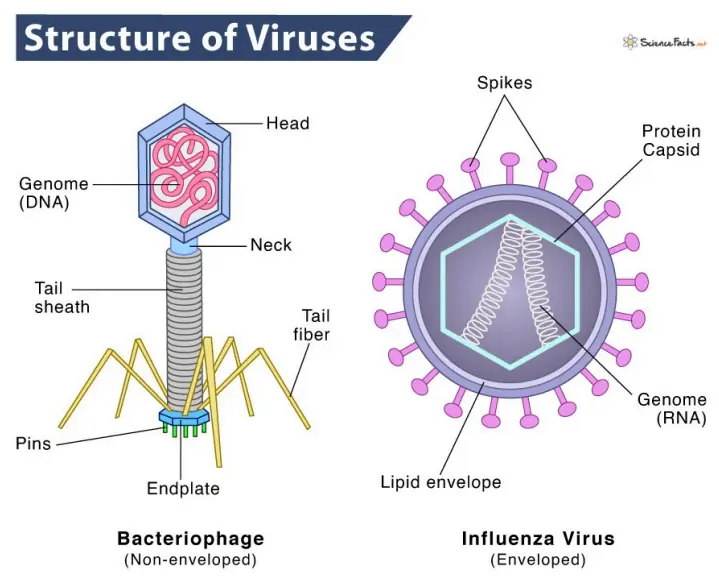
- A virus is the smallest germ, so small it passes through a bacteria-proof filter.
- It is genetic material (either DNA or RNA, never both) wrapped in a protein coat called the capsid, made of subunits called capsomeres.
- A virus is an obligate parasite (a nucleoprotein): alive only inside a host, inert outside.
- The name virus was given by Dmitri Ivanowsky (1892) while studying tobacco mosaic disease.
- M.W. Beijerinck (1898) called it Contagium vivum fluidum; W.M. Stanley (1935) crystallised it.
- A bacteriophage infects bacteria; the Hershey-Chase experiment used it to prove DNA is the genetic material.
Check yourself
Viruses: Structure and Key Facts
- A virus is the smallest germ, so small it passes through a bacteria-proof filter.
- It is genetic material (either DNA or RNA, never both) wrapped in a protein coat called the capsid, made of subunits called capsomeres.
- A virus is an obligate parasite (a nucleoprotein): alive only inside a host, inert outside.
- The name virus was given by Dmitri Ivanowsky (1892) while studying tobacco mosaic disease.
- M.W. Beijerinck (1898) called it Contagium vivum fluidum; W.M. Stanley (1935) crystallised it.
- A bacteriophage infects bacteria; the Hershey-Chase experiment used it to prove DNA is the genetic material.
A virus is the , so small it passes through a bacteria-proof filter.
A virus is the smallest germ, so small it passes through a bacteria-proof filter.
It is genetic material () wrapped in a protein coat called the , made of subunits called .
It is genetic material (either DNA or RNA, never both) wrapped in a protein coat called the capsid, made of subunits called capsomeres.
A virus is an (a nucleoprotein): alive only inside a host, inert outside.
A virus is an obligate parasite (a nucleoprotein): alive only inside a host, inert outside.
called it Contagium vivum fluidum; crystallised it.
M.W. Beijerinck (1898) called it Contagium vivum fluidum; W.M. Stanley (1935) crystallised it.
A infects bacteria; the used it to prove DNA is the genetic material.
A bacteriophage infects bacteria; the Hershey-Chase experiment used it to prove DNA is the genetic material.
How Diseases Spread (Transmission)
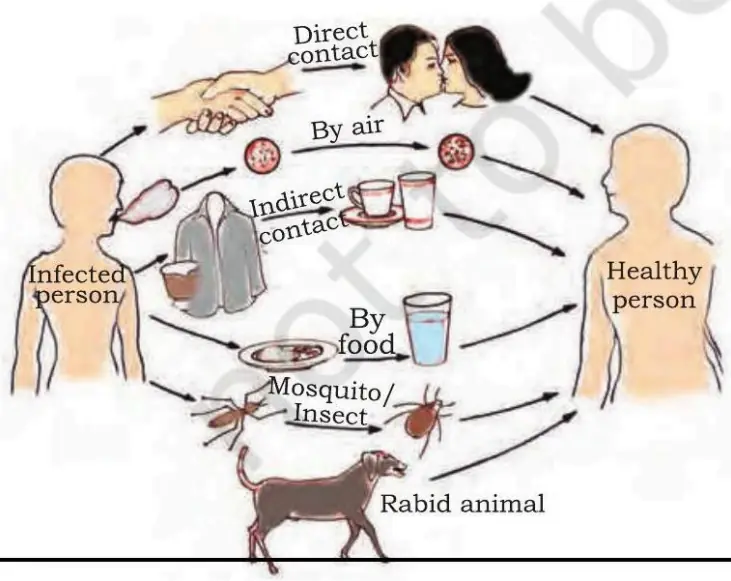
- Airborne spread: germs ride in droplets from coughs/sneezes, e.g. common cold, pneumonia, TB.
- Waterborne spread: germs enter via dirty water/food, e.g. typhoid and cholera (classic waterborne diseases).
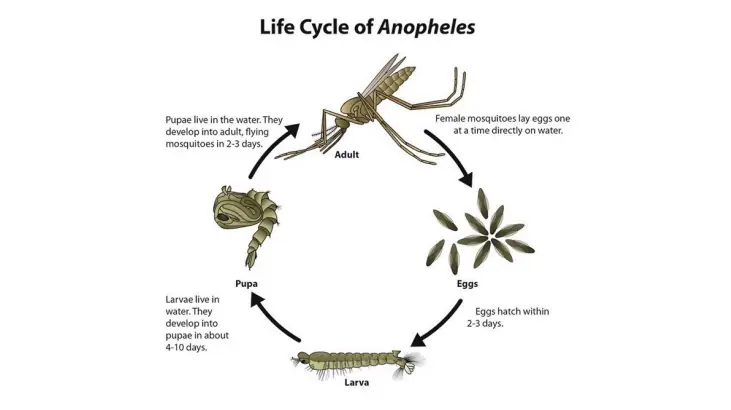
- Vector-borne spread: an insect carrier (vector) ferries the germ; the mosquito is the most important vector.
- Direct/sexual contact: STIs like syphilis, gonorrhoea and AIDS spread this way.
- AIDS can also spread via shared needles, infected blood transfusion, or mother-to-foetus through the placenta.
| Mode | Diseases |
|---|---|
| Air (droplet) | Common cold, pneumonia, TB |
| Water/food | Typhoid, cholera |
| Vector (insect) | Malaria, dengue, filariasis |
| Sexual/blood | Syphilis, gonorrhoea, AIDS |
Check yourself
How Diseases Spread (Transmission)
- Airborne spread: germs ride in droplets from coughs/sneezes, e.g. common cold, pneumonia, TB.
- Waterborne spread: germs enter via dirty water/food, e.g. typhoid and cholera (classic waterborne diseases).
- Vector-borne spread: an insect carrier (vector) ferries the germ; the mosquito is the most important vector.
- Direct/sexual contact: STIs like syphilis, gonorrhoea and AIDS spread this way.
- AIDS can also spread via shared needles, infected blood transfusion, or mother-to-foetus through the placenta.
- Air (droplet) — Common cold, pneumonia, TB
- Water/food — Typhoid, cholera
- Vector (insect) — Malaria, dengue, filariasis
- Sexual/blood — Syphilis, gonorrhoea, AIDS
: germs ride in droplets from coughs/sneezes, e.g. common cold, pneumonia, TB.
Airborne spread: germs ride in droplets from coughs/sneezes, e.g. common cold, pneumonia, TB.
: germs enter via dirty water/food, e.g. typhoid and cholera (classic waterborne diseases).
Waterborne spread: germs enter via dirty water/food, e.g. typhoid and cholera (classic waterborne diseases).
: an insect carrier (vector) ferries the germ; the mosquito is the most important vector.
Vector-borne spread: an insect carrier (vector) ferries the germ; the mosquito is the most important vector.
: STIs like syphilis, gonorrhoea and AIDS spread this way.
Direct/sexual contact: STIs like syphilis, gonorrhoea and AIDS spread this way.
Mosquito Vectors (High-Yield Table)
- The female Anopheles mosquito spreads malaria, and also filariasis and encephalitis.
- The Aedes (tiger) mosquito spreads dengue and chikungunya.
- The Culex mosquito spreads filariasis and Japanese encephalitis.
- Resting posture clue: Anopheles sits at an angle (tilted); Culex sits parallel (flat) to the surface.
| Mosquito | Diseases Spread |
|---|---|
| Anopheles (female) | Malaria, filariasis, encephalitis |
| Aedes | Dengue, chikungunya, yellow fever, Zika |
| Culex | Filariasis, Japanese encephalitis |
Check yourself
Mosquito Vectors (High-Yield Table)
- The female Anopheles mosquito spreads malaria, and also filariasis and encephalitis.
- The Aedes (tiger) mosquito spreads dengue and chikungunya.
- The Culex mosquito spreads filariasis and Japanese encephalitis.
- Resting posture clue: Anopheles sits at an angle (tilted); Culex sits parallel (flat) to the surface.
- Anopheles (female) — Malaria, filariasis, encephalitis
- Aedes — Dengue, chikungunya, yellow fever, Zika
- Culex — Filariasis, Japanese encephalitis
The mosquito spreads , and also filariasis and encephalitis.
The female Anopheles mosquito spreads malaria, and also filariasis and encephalitis.
The (tiger) mosquito spreads .
The Aedes (tiger) mosquito spreads dengue and chikungunya.
The Culex mosquito spreads .
The Culex mosquito spreads filariasis and Japanese encephalitis.
Resting posture clue: ; to the surface.
Resting posture clue: Anopheles sits at an angle (tilted); Culex sits parallel (flat) to the surface.
Important Named Diseases (Exam Tags)
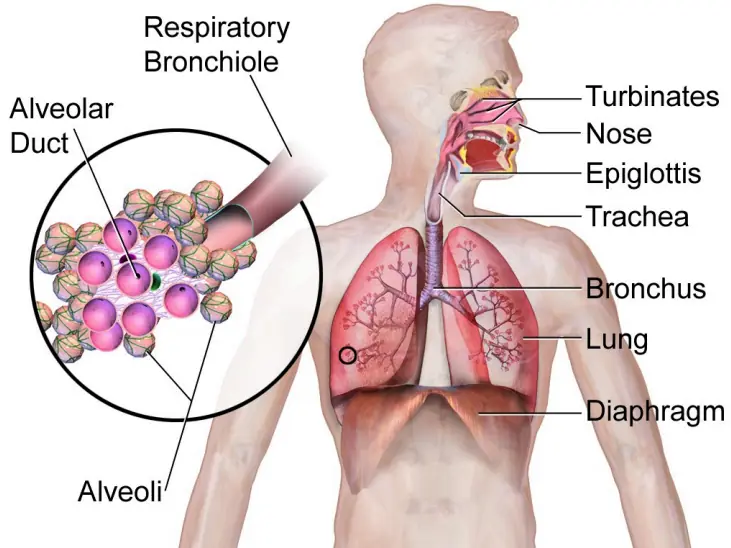
- Pneumonia is an infection of the lungs; air sacs fill with fluid causing cough and breathlessness.
- Anthrax (caused by Bacillus anthracis) is called splenic fever; it affects cattle and humans.
- Taeniasis is intestinal tapeworm infection (Taenia solium, saginata, asiatica); cysts in brain cause neurocysticercosis.
- Malaria (Plasmodium, via female Anopheles) is treated with chloroquine/quinine; quinine comes from Cinchona bark.
- Tetanus (lockjaw) causes muscle stiffness; treated with antitoxin (ATS) and prevented by vaccine.
- Haemophilus influenzae bacterium causes respiratory illness/meningitis; citrus canker is a bacterial plant disease.
Check yourself
Important Named Diseases (Exam Tags)
- Pneumonia is an infection of the lungs; air sacs fill with fluid causing cough and breathlessness.
- Anthrax (caused by Bacillus anthracis) is called splenic fever; it affects cattle and humans.
- Taeniasis is intestinal tapeworm infection (Taenia solium, saginata, asiatica); cysts in brain cause neurocysticercosis.
- Malaria (Plasmodium, via female Anopheles) is treated with chloroquine/quinine; quinine comes from Cinchona bark.
- Tetanus (lockjaw) causes muscle stiffness; treated with antitoxin (ATS) and prevented by vaccine.
- Haemophilus influenzae bacterium causes respiratory illness/meningitis; citrus canker is a bacterial plant disease.
is an infection of the lungs; air sacs fill with fluid causing cough and breathlessness.
Pneumonia is an infection of the lungs; air sacs fill with fluid causing cough and breathlessness.
(caused by Bacillus anthracis) is called ; it affects cattle and humans.
Anthrax (caused by Bacillus anthracis) is called splenic fever; it affects cattle and humans.
is intestinal tapeworm infection (Taenia solium, saginata, asiatica); cysts in brain cause .
Taeniasis is intestinal tapeworm infection (Taenia solium, saginata, asiatica); cysts in brain cause neurocysticercosis.
(Plasmodium, via female Anopheles) is treated with ; quinine comes from .
Malaria (Plasmodium, via female Anopheles) is treated with chloroquine/quinine; quinine comes from Cinchona bark.
causes muscle stiffness; treated with antitoxin (ATS) and prevented by vaccine.
Tetanus (lockjaw) causes muscle stiffness; treated with antitoxin (ATS) and prevented by vaccine.
bacterium causes respiratory illness/meningitis; is a bacterial plant disease.
Haemophilus influenzae bacterium causes respiratory illness/meningitis; citrus canker is a bacterial plant disease.
Disease - Prevention/Treatment Pairs
- Tuberculosis (TB) is prevented by the BCG vaccine.
- Diphtheria is covered by the DPT vaccine (diphtheria, pertussis, tetanus).
- Tetanus is prevented by vaccine and treated with antitetanus serum (ATS / antitoxin).
- Malaria is treated with chloroquine / quinine.
| Disease | Prevention / Treatment |
|---|---|
| TB | BCG vaccine |
| Diphtheria | DPT vaccine |
| Tetanus | Vaccine + ATS antitoxin |
| Malaria | Chloroquine / quinine |
| Polio | Oral polio vaccine (OPV) |
Check yourself
Disease - Prevention/Treatment Pairs
- Tuberculosis (TB) is prevented by the BCG vaccine.
- Diphtheria is covered by the DPT vaccine (diphtheria, pertussis, tetanus).
- Tetanus is prevented by vaccine and treated with antitetanus serum (ATS / antitoxin).
- Malaria is treated with chloroquine / quinine.
- TB — BCG vaccine
- Diphtheria — DPT vaccine
- Tetanus — Vaccine + ATS antitoxin
- Malaria — Chloroquine / quinine
- Polio — Oral polio vaccine (OPV)
is prevented by the .
Tuberculosis (TB) is prevented by the BCG vaccine.
is covered by the (diphtheria, pertussis, tetanus).
Diphtheria is covered by the DPT vaccine (diphtheria, pertussis, tetanus).
is prevented by vaccine and treated with .
Tetanus is prevented by vaccine and treated with antitetanus serum (ATS / antitoxin).
Malaria is treated with .
Malaria is treated with chloroquine / quinine.
AIDS and HIV
- AIDS = Acquired Immuno-Deficiency Syndrome, caused by the Human Immunodeficiency Virus (HIV).
- HIV is a retrovirus with an RNA genome inside an envelope.
- It copies RNA into DNA using the enzyme reverse transcriptase ('retro' = backwards).
- HIV first enters macrophages, which become an HIV factory, then attacks helper T-lymphocytes.
- Destroying helper T-cells weakens immunity, so the body falls prey to other infections.
- It spreads by unprotected sex, infected blood/needles, and mother-to-child; not by casual touch.
Check yourself
AIDS and HIV
- AIDS = Acquired Immuno-Deficiency Syndrome, caused by the Human Immunodeficiency Virus (HIV).
- HIV is a retrovirus with an RNA genome inside an envelope.
- It copies RNA into DNA using the enzyme reverse transcriptase ('retro' = backwards).
- HIV first enters macrophages, which become an HIV factory, then attacks helper T-lymphocytes.
- Destroying helper T-cells weakens immunity, so the body falls prey to other infections.
- It spreads by unprotected sex, infected blood/needles, and mother-to-child; not by casual touch.
AIDS = Acquired Immuno-Deficiency Syndrome, caused by the .
AIDS = Acquired Immuno-Deficiency Syndrome, caused by the Human Immunodeficiency Virus (HIV).
HIV is a with an inside an envelope.
HIV is a retrovirus with an RNA genome inside an envelope.
It copies RNA into DNA using the enzyme ('retro' = backwards).
It copies RNA into DNA using the enzyme reverse transcriptase ('retro' = backwards).
HIV first enters , which become an HIV factory, then attacks .
HIV first enters macrophages, which become an HIV factory, then attacks helper T-lymphocytes.
Destroying helper T-cells , so the body falls prey to other infections.
Destroying helper T-cells weakens immunity, so the body falls prey to other infections.
The Immune System and Blood Cells
- Immunity is the body's defence; the most important cells are the white blood cells (WBCs / leucocytes).
- Lymphocytes are the key immune cells: B-cells make antibodies, T-cells direct cell-mediated defence.
- An antigen is a foreign substance; the body makes matching antibodies to neutralise it.
- Lymphocytes are formed in the bone marrow (T-cells mature in the thymus).
- Innate immunity is present from birth; acquired immunity develops after exposure or vaccination.
- Leukaemia is blood cancer with an abnormal increase in white blood cells.
Check yourself
The Immune System and Blood Cells
- Immunity is the body's defence; the most important cells are the white blood cells (WBCs / leucocytes).
- Lymphocytes are the key immune cells: B-cells make antibodies, T-cells direct cell-mediated defence.
- An antigen is a foreign substance; the body makes matching antibodies to neutralise it.
- Lymphocytes are formed in the bone marrow (T-cells mature in the thymus).
- Innate immunity is present from birth; acquired immunity develops after exposure or vaccination.
- Leukaemia is blood cancer with an abnormal increase in white blood cells.
Immunity is the body's defence; the most important cells are the .
Immunity is the body's defence; the most important cells are the white blood cells (WBCs / leucocytes).
are the key immune cells: , direct cell-mediated defence.
Lymphocytes are the key immune cells: B-cells make antibodies, T-cells direct cell-mediated defence.
An is a foreign substance; the body makes matching to neutralise it.
An antigen is a foreign substance; the body makes matching antibodies to neutralise it.
Lymphocytes are formed in the (T-cells mature in the thymus).
Lymphocytes are formed in the bone marrow (T-cells mature in the thymus).
is present from birth; develops after exposure or vaccination.
Innate immunity is present from birth; acquired immunity develops after exposure or vaccination.
is blood cancer with an abnormal increase in white blood cells.
Leukaemia is blood cancer with an abnormal increase in white blood cells.
Antibodies (Immunoglobulins)
- Antibodies are protein molecules called immunoglobulins (Ig) produced by B-lymphocytes.
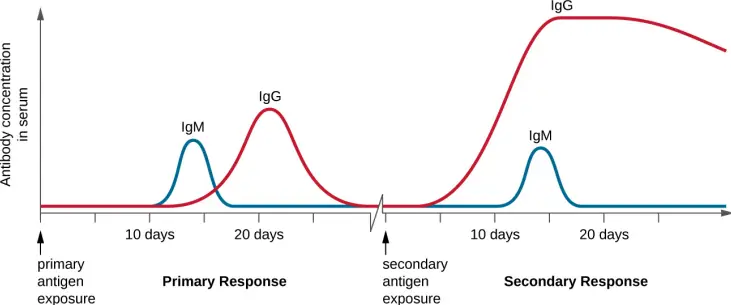
- IgM is the first antibody produced in response to a new infection.
- IgG is the most abundant and provides long-term protection; it crosses the placenta.
- IgA guards mucous membranes (saliva, tears, milk); IgE is linked to allergies.
| Antibody | Key Feature |
|---|---|
| IgM | First produced in infection |
| IgG | Most abundant, long-term, crosses placenta |
| IgA | Protects mucosa (saliva, tears, milk) |
| IgE | Allergy and parasite response |
Check yourself
Antibodies (Immunoglobulins)
- Antibodies are protein molecules called immunoglobulins (Ig) produced by B-lymphocytes.
- IgM is the first antibody produced in response to a new infection.
- IgG is the most abundant and provides long-term protection; it crosses the placenta.
- IgA guards mucous membranes (saliva, tears, milk); IgE is linked to allergies.
- IgM — First produced in infection
- IgG — Most abundant, long-term, crosses placenta
- IgA — Protects mucosa (saliva, tears, milk)
- IgE — Allergy and parasite response
Antibodies are protein molecules called produced by B-lymphocytes.
Antibodies are protein molecules called immunoglobulins (Ig) produced by B-lymphocytes.
and provides long-term protection; it crosses the placenta.
IgG is the most abundant and provides long-term protection; it crosses the placenta.
guards mucous membranes (saliva, tears, milk); is linked to allergies.
IgA guards mucous membranes (saliva, tears, milk); IgE is linked to allergies.
Vaccines and How They Work
- A vaccine introduces a harmless form of a pathogen (an antigen) so the body makes antibodies in advance.
- This builds memory cells, giving fast protection if the real germ attacks later.
- Live attenuated vaccines use weakened germs; inactivated vaccines use killed germs.
- mRNA vaccines deliver genetic instructions so cells make the viral spike protein (e.g. Pfizer, Moderna against Covid-19).
- Vector vaccines use a harmless carrier virus to deliver the antigen gene (e.g. Covishield).
- Covishield is made by the Serum Institute of India (Oxford-AstraZeneca technology).
Check yourself
Vaccines and How They Work
- A vaccine introduces a harmless form of a pathogen (an antigen) so the body makes antibodies in advance.
- This builds memory cells, giving fast protection if the real germ attacks later.
- Live attenuated vaccines use weakened germs; inactivated vaccines use killed germs.
- mRNA vaccines deliver genetic instructions so cells make the viral spike protein (e.g. Pfizer, Moderna against Covid-19).
- Vector vaccines use a harmless carrier virus to deliver the antigen gene (e.g. Covishield).
- Covishield is made by the Serum Institute of India (Oxford-AstraZeneca technology).
A introduces a harmless form of a pathogen (an antigen) so the body makes antibodies in advance.
A vaccine introduces a harmless form of a pathogen (an antigen) so the body makes antibodies in advance.
This builds , giving fast protection if the real germ attacks later.
This builds memory cells, giving fast protection if the real germ attacks later.
vaccines use weakened germs; vaccines use killed germs.
Live attenuated vaccines use weakened germs; inactivated vaccines use killed germs.
deliver genetic instructions so cells make the viral spike protein (e.g. Pfizer, Moderna against Covid-19).
mRNA vaccines deliver genetic instructions so cells make the viral spike protein (e.g. Pfizer, Moderna against Covid-19).
use a harmless carrier virus to deliver the antigen gene (e.g. Covishield).
Vector vaccines use a harmless carrier virus to deliver the antigen gene (e.g. Covishield).
is made by the (Oxford-AstraZeneca technology).
Covishield is made by the Serum Institute of India (Oxford-AstraZeneca technology).
Vaccine Immune Response Steps
- Step 1: The vaccine introduces an antigen recognised as foreign.
- Step 2: B-lymphocytes produce antibodies against that antigen.
- Step 3: The body forms memory cells that remember the pathogen.
- Step 4: On real exposure, memory cells trigger a fast, strong secondary response.
Check yourself
Vaccine Immune Response Steps
- Step 1: The vaccine introduces an antigen recognised as foreign.
- Step 2: B-lymphocytes produce antibodies against that antigen.
- Step 3: The body forms memory cells that remember the pathogen.
- Step 4: On real exposure, memory cells trigger a fast, strong secondary response.
Step 1: The vaccine introduces an recognised as foreign.
Step 1: The vaccine introduces an antigen recognised as foreign.
Step 2: B-lymphocytes produce against that antigen.
Step 2: B-lymphocytes produce antibodies against that antigen.
Step 3: The body forms that remember the pathogen.
Step 3: The body forms memory cells that remember the pathogen.
Step 4: On real exposure, memory cells trigger a .
Step 4: On real exposure, memory cells trigger a fast, strong secondary response.
Deficiency Diseases
- Scurvy (bleeding gums) is due to lack of Vitamin C.
- Beri-beri is caused by lack of thiamine (Vitamin B1); eating only polished rice causes it.
- Kwashiorkor and marasmus are due to protein deficiency in children.
- Iron deficiency causes anaemia; iodine deficiency causes goitre.
- Dengue fever causes a sharp fall in platelets (thrombocytes).
| Deficiency | Disease |
|---|---|
| Vitamin C | Scurvy |
| Vitamin B1 (thiamine) | Beri-beri |
| Protein | Kwashiorkor, marasmus |
| Iron | Anaemia |
| Iodine | Goitre |
Check yourself
Deficiency Diseases
- Scurvy (bleeding gums) is due to lack of Vitamin C.
- Beri-beri is caused by lack of thiamine (Vitamin B1); eating only polished rice causes it.
- Kwashiorkor and marasmus are due to protein deficiency in children.
- Iron deficiency causes anaemia; iodine deficiency causes goitre.
- Dengue fever causes a sharp fall in platelets (thrombocytes).
- Vitamin C — Scurvy
- Vitamin B1 (thiamine) — Beri-beri
- Protein — Kwashiorkor, marasmus
- Iron — Anaemia
- Iodine — Goitre
(bleeding gums) is due to lack of .
Scurvy (bleeding gums) is due to lack of Vitamin C.
is caused by lack of ; eating only polished rice causes it.
Beri-beri is caused by lack of thiamine (Vitamin B1); eating only polished rice causes it.
are due to in children.
Kwashiorkor and marasmus are due to protein deficiency in children.
Dengue fever causes a sharp fall in .
Dengue fever causes a sharp fall in platelets (thrombocytes).
Cancer and Lifestyle Diseases
- Cancer is uncontrolled, abnormal cell division forming tumours.
- Oncogenes are cancer-causing genes; normal genes can mutate into them.
- Carcinogens (cancer-causing agents) include tobacco, UV rays and certain chemicals; UV rays cause skin cancer.
- Radiation can both cause cancer and, in controlled doses, treat it (radiotherapy).
- Leukaemia is cancer of white blood cells (blood cancer).
- Lifestyle/non-communicable diseases include diabetes, hypertension and heart disease.
Check yourself
Cancer and Lifestyle Diseases
- Cancer is uncontrolled, abnormal cell division forming tumours.
- Oncogenes are cancer-causing genes; normal genes can mutate into them.
- Carcinogens (cancer-causing agents) include tobacco, UV rays and certain chemicals; UV rays cause skin cancer.
- Radiation can both cause cancer and, in controlled doses, treat it (radiotherapy).
- Leukaemia is cancer of white blood cells (blood cancer).
- Lifestyle/non-communicable diseases include diabetes, hypertension and heart disease.
is uncontrolled, abnormal cell division forming tumours.
Cancer is uncontrolled, abnormal cell division forming tumours.
are cancer-causing genes; normal genes can mutate into them.
Oncogenes are cancer-causing genes; normal genes can mutate into them.
(cancer-causing agents) include tobacco, UV rays and certain chemicals; .
Carcinogens (cancer-causing agents) include tobacco, UV rays and certain chemicals; UV rays cause skin cancer.
can both cause cancer and, in controlled doses, treat it (radiotherapy).
Radiation can both cause cancer and, in controlled doses, treat it (radiotherapy).
is cancer of white blood cells (blood cancer).
Leukaemia is cancer of white blood cells (blood cancer).
Disease Outbreak Terms and Disorders
- Epidemic: disease spreads rapidly across a large community or region.
- Pandemic: an outbreak spreads across many countries or the whole world (e.g. Covid-19).
- Endemic: a disease constantly present in a particular area.
- Insomnia is a sleep disorder (inability to sleep); sleep apnea is repeated stopping of breathing during sleep.
- Anorexia is loss/lack of appetite; bulimia involves not knowing when to stop eating.
- Dyspnoea means shortness of breath; anosmia means loss of the sense of smell.
| Term | Meaning |
|---|---|
| Epidemic | Spreads across a region |
| Pandemic | Spreads worldwide |
| Endemic | Always present in an area |
Check yourself
Disease Outbreak Terms and Disorders
- Epidemic: disease spreads rapidly across a large community or region.
- Pandemic: an outbreak spreads across many countries or the whole world (e.g. Covid-19).
- Endemic: a disease constantly present in a particular area.
- Insomnia is a sleep disorder (inability to sleep); sleep apnea is repeated stopping of breathing during sleep.
- Anorexia is loss/lack of appetite; bulimia involves not knowing when to stop eating.
- Dyspnoea means shortness of breath; anosmia means loss of the sense of smell.
- Epidemic — Spreads across a region
- Pandemic — Spreads worldwide
- Endemic — Always present in an area
: disease spreads rapidly across a large community or region.
Epidemic: disease spreads rapidly across a large community or region.
: an outbreak spreads across many countries or the whole world (e.g. Covid-19).
Pandemic: an outbreak spreads across many countries or the whole world (e.g. Covid-19).
: a disease constantly present in a particular area.
Endemic: a disease constantly present in a particular area.
is a sleep disorder (inability to sleep); is repeated stopping of breathing during sleep.
Insomnia is a sleep disorder (inability to sleep); sleep apnea is repeated stopping of breathing during sleep.
is loss/lack of appetite; involves not knowing when to stop eating.
Anorexia is loss/lack of appetite; bulimia involves not knowing when to stop eating.
means shortness of breath; means loss of the sense of smell.
Dyspnoea means shortness of breath; anosmia means loss of the sense of smell.
Food Preservation and Disease Prevention
- Refrigeration preserves food by slowing the growth of microbes, not by killing them.
- Pasteurisation heats milk to kill harmful germs while keeping it usable.
- Clean water and sanitation prevent waterborne diseases like typhoid and cholera.
- Vaccination and good ventilation cut airborne and preventable infections.
Check yourself
Food Preservation and Disease Prevention
- Refrigeration preserves food by slowing the growth of microbes, not by killing them.
- Pasteurisation heats milk to kill harmful germs while keeping it usable.
- Clean water and sanitation prevent waterborne diseases like typhoid and cholera.
- Vaccination and good ventilation cut airborne and preventable infections.
preserves food by , not by killing them.
Refrigeration preserves food by slowing the growth of microbes, not by killing them.
heats milk to kill harmful germs while keeping it usable.
Pasteurisation heats milk to kill harmful germs while keeping it usable.
prevent waterborne diseases like typhoid and cholera.
Clean water and sanitation prevent waterborne diseases like typhoid and cholera.
and good ventilation cut airborne and preventable infections.
Vaccination and good ventilation cut airborne and preventable infections.
All 19 chapters of Biology notes
- Cell: Structure & Function12 sections
- Biomolecules & DNA/RNA11 sections
- Plant Kingdom & Classification11 sections
- Plant Tissues & Anatomy12 sections
- Plant Physiology: Photosynthesis, Respiration & Nutrition14 sections
- Animal Kingdom, Morphology & Classification16 sections
- Nutrition & Digestive System12 sections
- Circulatory System & Body Fluids12 sections
- Respiratory System10 sections
- Excretory System12 sections
- Nervous System & Sense Organs12 sections
- Endocrine System & Hormones14 sections
- Skeletal & Muscular System12 sections
- Reproductive System & Reproductive Health12 sections
- Genetics & Evolution13 sections
- Human Health, Diseases & Immunity16 sections
- Ecology, Ecosystem & Biodiversity12 sections
- Biology in Everyday Life & Applied Biology12 sections
- Inventions, Discoveries & Scientists10 sections