An atom is the smallest particle of an element that takes part in a chemical reaction.
The word comes from Greek 'atomos', meaning indivisible or that which cannot be cut.
Atoms are the building blocks of all matter – about 118 elements are known today.
The radius of an atom is roughly 10⁻¹⁰ metre, also called 1 angstrom (Å).
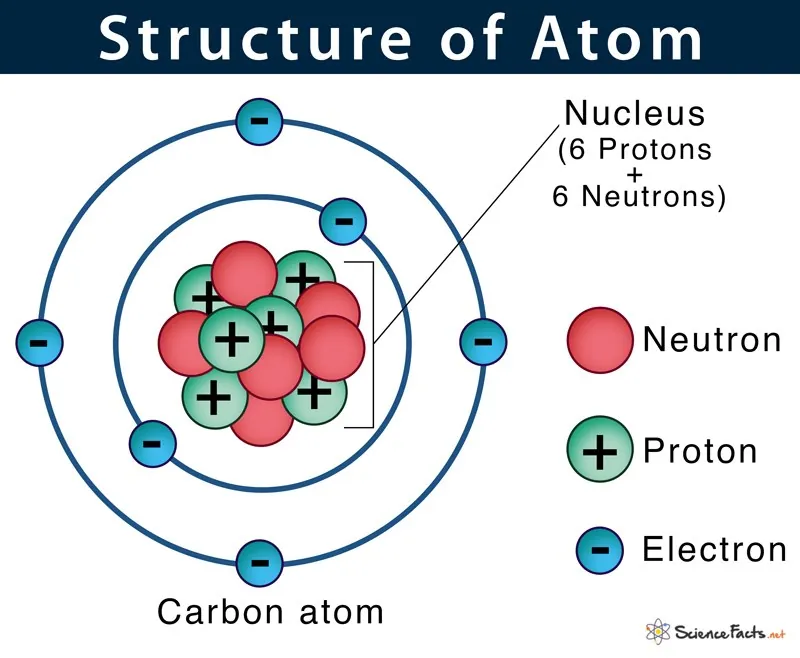
Though once called indivisible, an atom is actually made of three sub-atomic particles – protons, neutrons and electrons.
What is an Atom?
Check yourself
What is an atom, and where does the word come from?
The smallest particle of an element that takes part in a chemical reaction. From the Greek 'atomos' = indivisible.
How many elements are known, and how big is an atom?
About 118 elements. An atom's radius is roughly 10⁻¹⁰ metre, also called 1 angstrom (Å).
The word comes from Greek , meaning indivisible or that which cannot be cut.
The word comes from Greek 'atomos', meaning indivisible or that which cannot be cut.
Atoms are the building blocks of all matter – ==about elements are known today.==
Atoms are the building blocks of all matter – ==about 118elements are known today.==
Though once called indivisible, an atom is actually made of three – protons, neutrons and electrons.
Though once called indivisible, an atom is actually made of three sub-atomic particles – protons, neutrons and electrons.
What does this diagram show?
What is an Atom?
History of the Atom Concept
In ancient India Maharishi Kanad and in Greece Democritus (~500 BC) first suggested matter is made of tiny particles.
These were only ideas – they had no experiments to prove them.
Dalton's theory neatly explained the basic laws of chemical combination.
Its limits: it could not explain radioactivity, isotopes, or the fact that atoms are divisible.
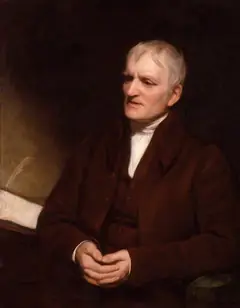
John DaltonJohn Dalton (1808) gave the first scientific atomic theory and is called the father of modern atomic theory.
Check yourself
Who first suggested matter is made of tiny particles?
Maharishi Kanad in ancient India and Democritus in Greece (~500 BC) — but these were only ideas, with no experiments.
What could Dalton's atomic theory NOT explain?
Radioactivity, isotopes, and the fact that atoms are divisible. 'Law of radioactivity' in an options list is always the wrong one.
Dalton's Atomic Theory & Laws
All matter is made of tiny indivisible atoms that cannot be created or destroyed.
Atoms of the same element are identical; atoms of different elements differ.
Atoms combine in small whole-number ratios to form compounds.
It explained the Law of Conservation of Mass, the Law of Constant Composition and the Law of Multiple Proportions.
Law
Meaning
Conservation of Mass
Mass is neither created nor destroyed in a reaction
Constant Composition
A compound always has same elements in same ratio
Multiple Proportions
Same elements form compounds in simple whole-number mass ratios
John DaltonNote: Dalton's theory did NOT explain the law of radioactivity (a common exam trap).
Check yourself
What are Dalton's main postulates?
Matter is made of tiny indivisible atoms that cannot be created or destroyed; atoms of the same element are identical; atoms combine in small whole-number ratios.
Which three laws did Dalton's theory explain?
Conservation of Mass, Constant Composition and Multiple Proportions.
Atoms of the ; atoms of different elements differ.
Atoms of the same element are identical; atoms of different elements differ.
Law: Conservation of Mass → Meaning?
Meaning
Mass is neither created nor destroyed in a reaction
Law: Constant Composition → Meaning?
Meaning
A compound always has same elements in same ratio
Law: Multiple Proportions → Meaning?
Meaning
Same elements form compounds in simple whole-number mass ratios
Discovery of Sub-atomic Particles
The neutron was found last because a neutral particle is very hard to detect.
A proton's positive charge exactly cancels an electron's negative charge, keeping the atom neutral.
An electron is about 1836 times lighter than a proton, so its mass is treated as negligible.
Particle
Charge
Discoverer
Electron
−1 (negative)
J. J. Thomson (1897)
Proton
+1 (positive)
Goldstein / Rutherford
Neutron
0 (neutral)
James Chadwick (1932)
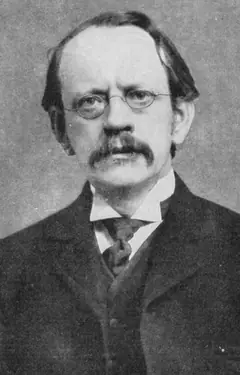
J. J. ThomsonThe electron (negative) was discovered by J. J. Thomson in 1897 using cathode-ray experiments.
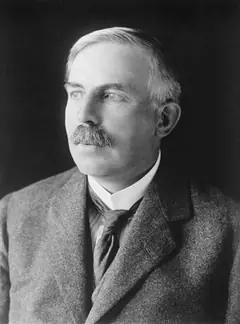
Ernest RutherfordE. Goldstein (1886) found positive 'canal rays'; the proton was later established by Rutherford.
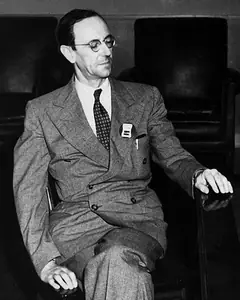
James ChadwickThe neutron (no charge) was discovered by James Chadwick in 1932.
Check yourself
Who discovered the electron?
J. J. Thomson in 1897, using cathode-ray experiments.
Who found canal rays, and who established the proton?
E. Goldstein (1886) found positive 'canal rays'; the proton was later established by Rutherford.
Who discovered the neutron, and why was it found last?
James Chadwick, 1932. A neutral particle is very hard to detect.
How much lighter is an electron than a proton?
About 1836 times lighter — so its mass is treated as negligible.
A proton's positive charge exactly cancels an electron's negative charge, keeping the atom .
A proton's positive charge exactly cancels an electron's negative charge, keeping the atom neutral.
Particle: Electron → Charge · Discoverer?
Charge
−1 (negative)
Discoverer
J. J. Thomson (1897)
Particle: Proton → Charge · Discoverer?
Charge
+1 (positive)
Discoverer
Goldstein / Rutherford
Particle: Neutron → Charge · Discoverer?
Charge
0 (neutral)
Discoverer
James Chadwick (1932)
Who is this, and what should you remember about them?
J. J. Thomson
The electron (negative) was discovered by J. J. Thomson in 1897 using cathode-ray experiments.
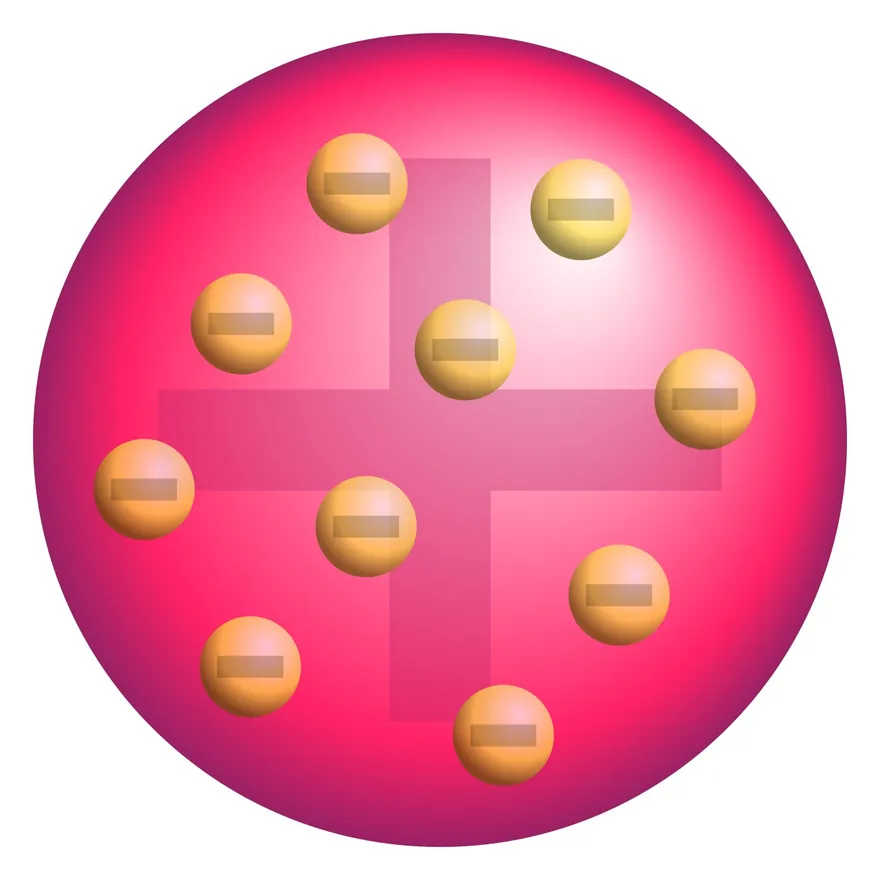
Given by J. J. Thomson in 1898, also called the plum-pudding (watermelon) model.
Who is this, and what should you remember about them?
James Chadwick
The neutron (no charge) was discovered by James Chadwick in 1932.
Thomson's Plum-Pudding Model
The atom is a positively charged sphere with electrons embedded in it like seeds.
Positive and negative charges balance, so the atom is overall neutral.
It could not explain results of later scattering experiments and was replaced.
J. J. ThomsonGiven by J. J. Thomson in 1898, also called the plum-pudding (watermelon) model.
Thomson plum pudding model of atom
Check yourself
What is Thomson's plum-pudding model?
Given by J. J. Thomson in 1898 — the atom is a positively charged sphere with electrons embedded in it like seeds (watermelon model).
Who proposed the FIRST model of atomic structure?
J. J. Thomson — the plum pudding model. Rutherford (1911) and Bohr (1913) came later.
Positive and negative charges , so the atom is overall neutral.
Positive and negative charges balance, so the atom is overall neutral.
What does this diagram show?
Thomson plum pudding model of atom
Rutherford's Nuclear Model
Most alpha particles passed straight through – the atom is mostly empty space.
A few bounced back sharply – there is a tiny, dense, positive nucleus at the centre.
Electrons revolve around the nucleus like planets around the sun.
Flaw: a revolving electron should lose energy and spiral into the nucleus in 10⁻⁸ seconds, so it could not explain atomic stability.
Ernest RutherfordBased on the famous gold-foil (alpha-particle scattering) experiment (1911).
Check yourself
What experiment gave Rutherford's nuclear model?
The gold-foil (alpha-particle scattering) experiment of 1911.
What did Rutherford conclude from alpha scattering?
Most particles passed straight through, so the atom is mostly empty space; a few bounced back, so there is a tiny dense positive nucleus; electrons revolve around it like planets.
What was the flaw in Rutherford's model?
A revolving electron should lose energy and spiral into the nucleus in 10⁻⁸ seconds — it could not explain atomic stability.
Bohr's Model of the Atom
Electrons revolve only in fixed allowed paths called orbits, shells or energy levels.
In these shells electrons do not lose energy, so the atom is stable.
An electron absorbs energy to jump to a higher shell and emits energy (light) when it falls back.
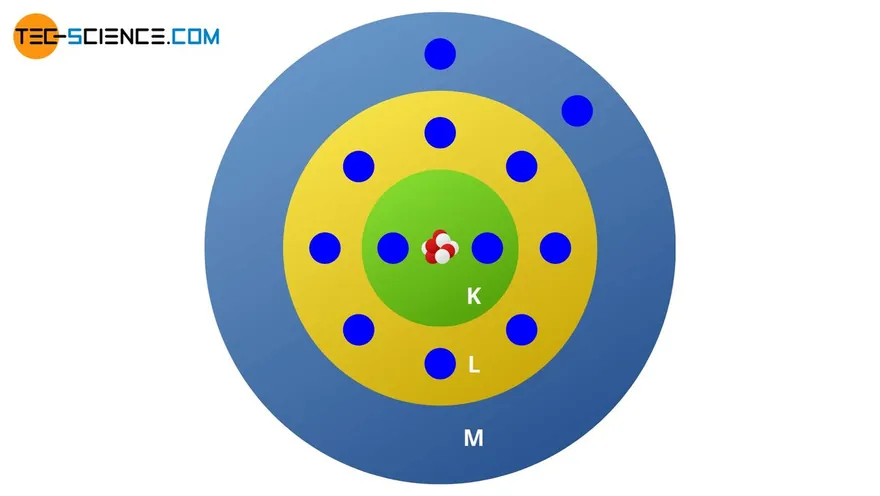
Shells are named K, L, M, N… starting from the one nearest the nucleus.
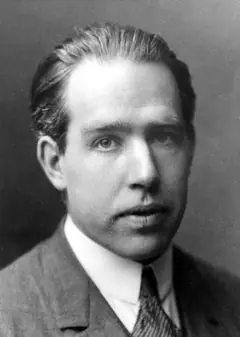
Niels BohrErnest RutherfordGiven by Niels Bohr in 1913 to fix Rutherford's stability problem.
Check yourself
How did Bohr (1913) fix Rutherford's problem?
Electrons revolve only in fixed allowed orbits/shells where they do not lose energy, so the atom is stable. Absorbing energy jumps an electron up; falling back emits light.
An electron to jump to a higher shell and emits energy (light) when it falls back.
An electron absorbs energy to jump to a higher shell and emits energy (light) when it falls back.
Shells are named … starting from the one nearest the nucleus.
Shells are named K, L, M, N… starting from the one nearest the nucleus.
Who is this, and what should you remember about them?
Niels Bohr
Given by Niels Bohr in 1913 to fix Rutherford's stability problem.
Electrons fill shells from the innermost outward: K, L, M, N.
The Nucleus and Nucleons
The nucleus is the tiny, dense, positively charged centre of the atom.
It contains protons and neutrons; electrons are NOT inside the nucleus.
Protons and neutrons together are called nucleons.
The positive charge of the nucleus is due to protons only.
Almost all the mass of the atom is concentrated in the nucleus.
Check yourself
What are nucleons, and where is the atom's mass?
Protons and neutrons together are nucleons. Almost all the mass of the atom is concentrated in the nucleus.
What gives the nucleus its positive charge?
Protons only — neutrons are neutral, and electrons are NOT inside the nucleus.
The is the tiny, dense, positively charged centre of the atom.
The nucleus is the tiny, dense, positively charged centre of the atom.
Atomic Number and Mass Number
Atomic Number (Z) = number of protons in the nucleus; it defines the element.
In a neutral atom, number of electrons = number of protons = Z.
Mass Number (A) = total nucleons = number of protons + number of neutrons.
Number of neutrons = A − Z (mass number minus atomic number).
An atom is written as ₓXᴬ, e.g. carbon as ₆C¹².
Example: ₉₄Pu²⁴² has neutrons = 242 − 94 = 148.
Quantity
Symbol
Formula
Atomic number
Z
Number of protons
Mass number
A
Protons + neutrons
Neutrons
n
A − Z
Check yourself
How do you find the number of neutrons?
n = A − Z (mass number minus atomic number). Example: ₉₄Pu²⁴² has 242 − 94 = 148 neutrons.
= number of protons in the nucleus; it defines the element.
Atomic Number (Z) = number of protons in the nucleus; it defines the element.
An atom is written as , e.g. carbon as ₆C¹².
An atom is written as ₓXᴬ, e.g. carbon as ₆C¹².
Quantity: Atomic number → Symbol · Formula?
Symbol
Z
Formula
Number of protons
Quantity: Mass number → Symbol · Formula?
Symbol
A
Formula
Protons + neutrons
Quantity: Neutrons → Symbol · Formula?
Symbol
n
Formula
A − Z
Isotopes, Isobars and Isotones
Isotopes = atoms of the same element with same Z but different mass number (different neutrons).
Isotopes have identical chemical properties but slightly different physical properties.
Isobars = atoms of different elements with the same mass number (A) but different Z.
Isotones = atoms with the same number of neutrons but different protons.
Uses: U-235 in nuclear reactors, Co-60 in cancer treatment, I-131 for goitre.
Type
Same
Different
Isotopes
Atomic number (Z)
Mass number (A)
Isobars
Mass number (A)
Atomic number (Z)
Isotones
No. of neutrons
Protons & mass no.
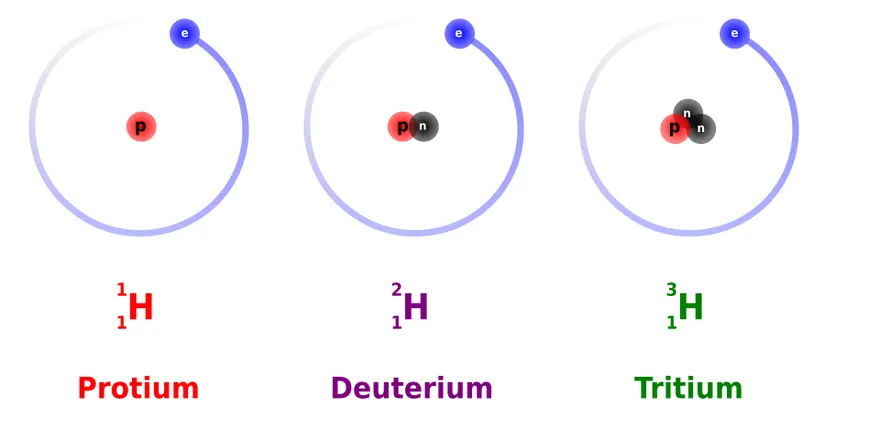
Isotopes of an element
Check yourself
Isotopes vs isobars vs isotones?
Isotopes: same Z, different A. Isobars: same A, different Z — different elements (¹⁴C and ¹⁴N). Isotones: same neutron count, different protons.
Do isotopes have the same properties?
Identical chemical properties (same electrons), but slightly different physical properties (different mass).
Three exam uses of isotopes?
U-235 in nuclear reactors, Co-60 in cancer treatment, I-131 for goitre/thyroid.
Name the hydrogen isotopes.
Protium (¹H), deuterium (²H) and tritium (³H) — they are isotopes of hydrogen, never of carbon.
= atoms of the same element with same Z but different mass number (different neutrons).
Isotopes = atoms of the same element with same Z but different mass number (different neutrons).
= atoms of different elements with the same mass number (A) but different Z.
Isobars = atoms of different elements with the same mass number (A) but different Z.
= atoms with the same number of neutrons but different protons.
Isotones = atoms with the same number of neutrons but different protons.
Type: Isotopes → Same · Different?
Same
Atomic number (Z)
Different
Mass number (A)
Type: Isobars → Same · Different?
Same
Mass number (A)
Different
Atomic number (Z)
Type: Isotones → Same · Different?
Same
No. of neutrons
Different
Protons & mass no.
What does this diagram show?
Isotopes of an element
Electronic Configuration (Bohr-Bury Rules)
Maximum electrons in a shell = 2n² (n = shell number).
So shells hold a maximum of 2, 8, 18, 32 electrons respectively.
The outermost shell can never hold more than 8 electrons.
Example: sodium (Z=11) configuration is 2, 8, 1.
An atom with 1, 2 or 3 outer electrons is usually a metal; with 5, 6, 7 usually a non-metal.
Shell
n
Max e⁻ (2n²)
K
1
2
L
2
8
M
3
18
N
4
32
Niels BohrElectrons fill shells from the innermost outward: K, L, M, N.
Electronic configuration (electron shells)
Check yourself
What is the maximum number of electrons in a shell?
2n² — so K = 2, L = 8, M = 18, N = 32.
How many electrons can the outermost shell hold?
Never more than 8, whatever 2n² allows.
How do you tell a metal from a non-metal by configuration?
1, 2 or 3 outer electrons = usually a metal (lost easily). 5, 6 or 7 = usually a non-metal. E.g. 2,8,8,2 is calcium — a metal.
So shells hold a maximum of electrons respectively.
So shells hold a maximum of 2, 8, 18, 32 electrons respectively.
Example: sodium (Z=11) configuration is .
Example: sodium (Z=11) configuration is 2, 8, 1.
Shell: K → n · Max e⁻ (2n²)?
n
1
Max e⁻ (2n²)
2
Shell: L → n · Max e⁻ (2n²)?
n
2
Max e⁻ (2n²)
8
Shell: M → n · Max e⁻ (2n²)?
n
3
Max e⁻ (2n²)
18
Shell: N → n · Max e⁻ (2n²)?
n
4
Max e⁻ (2n²)
32
What does this diagram show?
Electronic configuration (electron shells)
Valence Electrons, Valency and Ions
Valence electrons are the electrons in the outermost shell of an atom.
Valency = combining capacity; the electrons gained, lost or shared to complete the outer shell.
Atoms with a full outer shell (like noble gases) are stable and unreactive.
Losing electrons gives a positive ion called a cation; gaining electrons gives a negative ion called an anion.
Octet rule: atoms react to get 8 electrons (or 2 for the first shell) in the outer shell.
Example: sodium loses 1 electron to form Na⁺; chlorine gains 1 to form Cl⁻.
Check yourself
What is valency?
Combining capacity — the electrons gained, lost or shared to complete the outer shell. An element with 4 valence electrons has valency 4, giving XH₄ with hydrogen.
State the octet rule.
Atoms gain, lose or share electrons to get 8 electrons in the outer shell (or 2 for the first shell). Sodium loses 1 to form Na⁺; chlorine gains 1 to form Cl⁻.
Atoms with a (like noble gases) are stable and unreactive.
Atoms with a full outer shell (like noble gases) are stable and unreactive.
Losing electrons gives a positive ion called a ; gaining electrons gives a negative ion called an anion.
Losing electrons gives a positive ion called a cation; gaining electrons gives a negative ion called an anion.