Radioactivity is the spontaneous emission of invisible rays by certain unstable elements.
It happens on its own, without any external push like heat, light or chemicals.
The radiation comes from the nucleus, not the electrons, so it is a nuclear change, not a chemical one.
It cannot be started or stopped by heating, cooling, pressure or chemical reactions.
A nucleus becomes radioactive when it holds too many protons and neutrons to stay balanced.
Common radioactive elements are uranium, radium, thorium and polonium.
Check yourself
What is radioactivity?
The spontaneous emission of invisible rays by certain unstable elements. It happens on its own, without any external push like heat, light or chemicals.
Is radioactivity a chemical or nuclear property?
Nuclear — the radiation comes from the nucleus, not the electrons. It cannot be started or stopped by heating, cooling, pressure or chemical reactions.
When does a nucleus become radioactive, and which elements are common?
When it holds too many protons and neutrons to stay balanced. Common ones: uranium, radium, thorium and polonium.
History & Discovery
The Curies and Becquerel shared the 1903 Nobel Prize in Physics.
Frederick Soddy explained how one element changes into another and introduced isotopes.
The term radioactivity itself was coined by Becquerel.
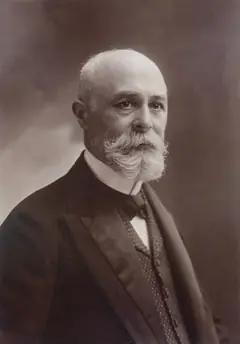
BecquerelHenri Becquerel discovered radioactivity in 1896 from uranium salts.
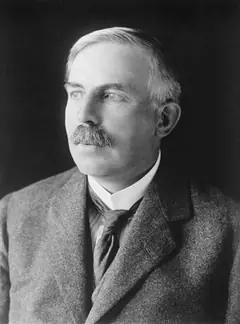
Ernest RutherfordErnest Rutherford identified alpha and beta rays and proved alpha is a helium nucleus.
Check yourself
Who discovered radioactivity, and when?
Henri Becquerel in 1896, from uranium salts. He also coined the term 'radioactivity'.
Who shared the 1903 Nobel Prize in Physics?
The Curies and Becquerel.
What did Rutherford and Soddy contribute?
Rutherford identified alpha and beta rays and proved alpha is a helium nucleus. Frederick Soddy explained how one element changes into another and introduced isotopes.
What are the units of radioactivity?
The Becquerel (1 decay per second) and the Curie.
Who is this, and what should you remember about them?
Henri Becquerel
Henri Becquerel discovered radioactivity in 1896 from uranium salts.
The Three Rays – Alpha, Beta, Gamma
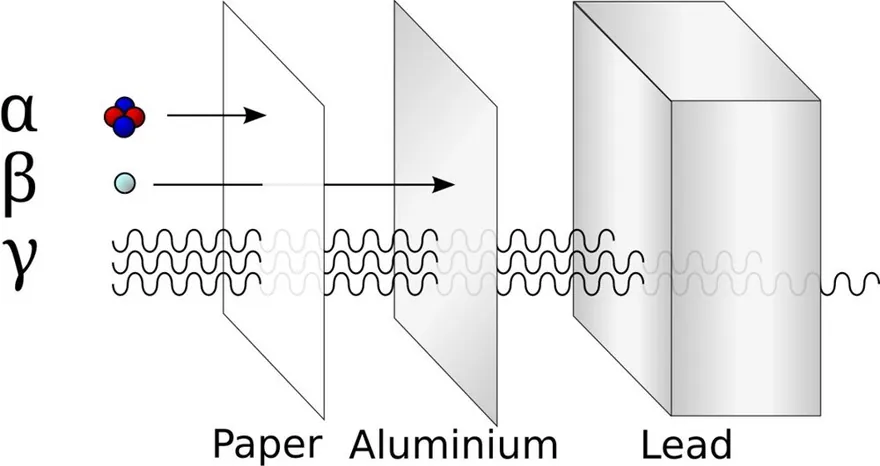
An alpha (α) particle is a helium nucleus – 2 protons + 2 neutrons, charge +2, mass 4.
A beta (β) ray is a stream of fast-moving electrons thrown out of the nucleus, charge −1.
A gamma (γ) ray is pure energy (electromagnetic wave) like X-rays, with no charge and no mass.
In an electric field: alpha bends to negative plate, beta to positive plate, gamma goes straight.
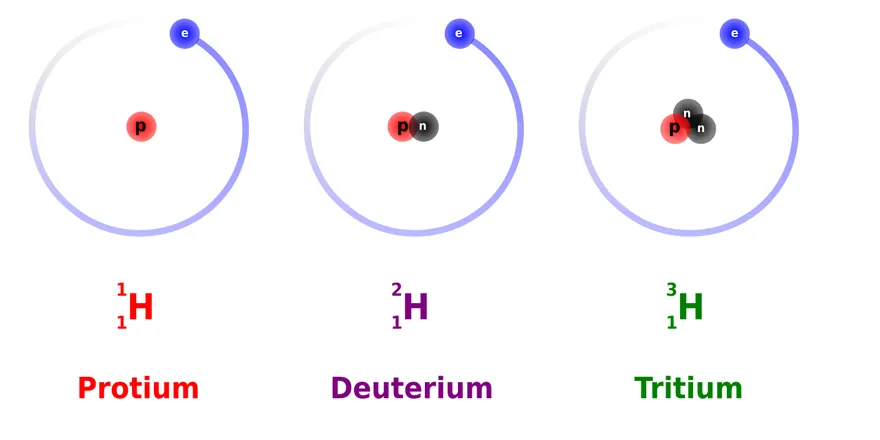
Abundance: , 0.015% deuterium, traces of radioactive tritium.
Abundance: 99.985% protium, 0.015% deuterium, traces of radioactive tritium.
: same mass number (A) but different atomic number – so different elements.
Isobars: same mass number (A) but different atomic number – so different elements.
Classic isobar pair: .
Classic isobar pair: ¹⁴C (Z=6) and ¹⁴N (Z=7).
Feature: Atomic no. (Z) → Isotopes · Isobars?
Isotopes
Same
Isobars
Different
Feature: Mass no. (A) → Isotopes · Isobars?
Isotopes
Different
Isobars
Same
Feature: Element → Isotopes · Isobars?
Isotopes
Same
Isobars
Different
Feature: Example → Isotopes · Isobars?
Isotopes
¹²C, ¹⁴C
Isobars
¹⁴C, ¹⁴N
What does this diagram show?
Isotopes vs Isobars
Half-Life & Rate of Decay
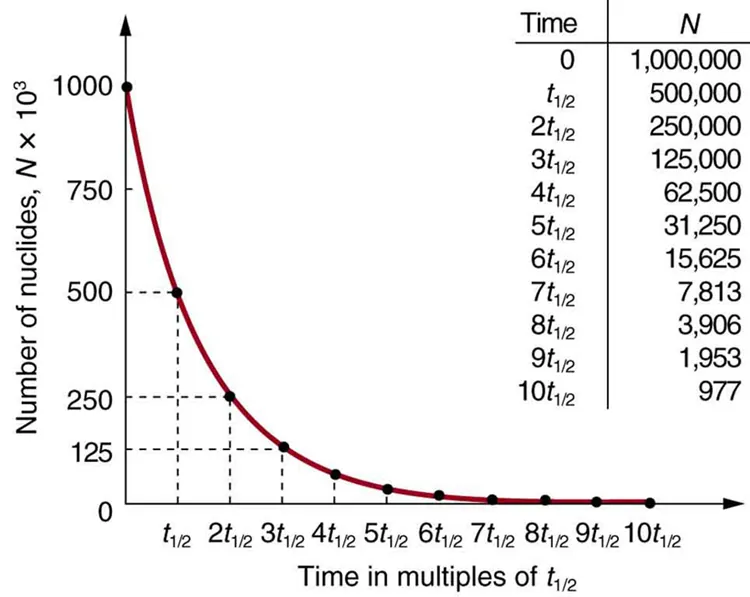
Half-life (t½) is the time for exactly half of a radioactive sample to decay.
After each half-life the remaining amount halves: 50% → 25% → 12.5%.
The amount left after n half-lives is (1/2)ⁿ of the original; it never reaches zero.
Half-life is fixed for each element and is unaffected by temperature, pressure or chemical state.
Carbon-14 half-life ≈ 5770 years; used in radiocarbon dating.
Uranium-238 ≈ 4.5 billion years; Radium-226 ≈ 1600 years.
Huge half-lives explain why such elements still exist on Earth today.
Half-lives passed
Sample left
0
100%
1
50%
2
25%
3
12.5%
4
6.25%
Half-Life & Rate of Decay
Check yourself
What is half-life?
The time for exactly half of a radioactive sample to decay. It is fixed for each element and unaffected by temperature, pressure or chemical state.
How much is left after n half-lives?
(1/2)ⁿ of the original — 100% → 50% → 25% → 12.5% → 6.25%. It never reaches zero.
Half-lives of carbon-14, uranium-238 and radium-226?
C-14 ≈ 5770 years (radiocarbon dating) · U-238 ≈ 4.5 billion years · Ra-226 ≈ 1600 years. Huge half-lives explain why such elements still exist on Earth.
After each half-life the remaining amount halves: 25% → 12.5%.
After each half-life the remaining amount halves: 50% →25% → 12.5%.
Half-lives passed: 0 → Sample left?
Sample left
100%
Half-lives passed: 1 → Sample left?
Sample left
50%
Half-lives passed: 2 → Sample left?
Sample left
25%
Half-lives passed: 3 → Sample left?
Sample left
12.5%
Half-lives passed: 4 → Sample left?
Sample left
6.25%
What does this diagram show?
Half-Life & Rate of Decay
Mass-Energy & Nuclear Fission
This mass-to-energy conversion is the source of all nuclear energy.
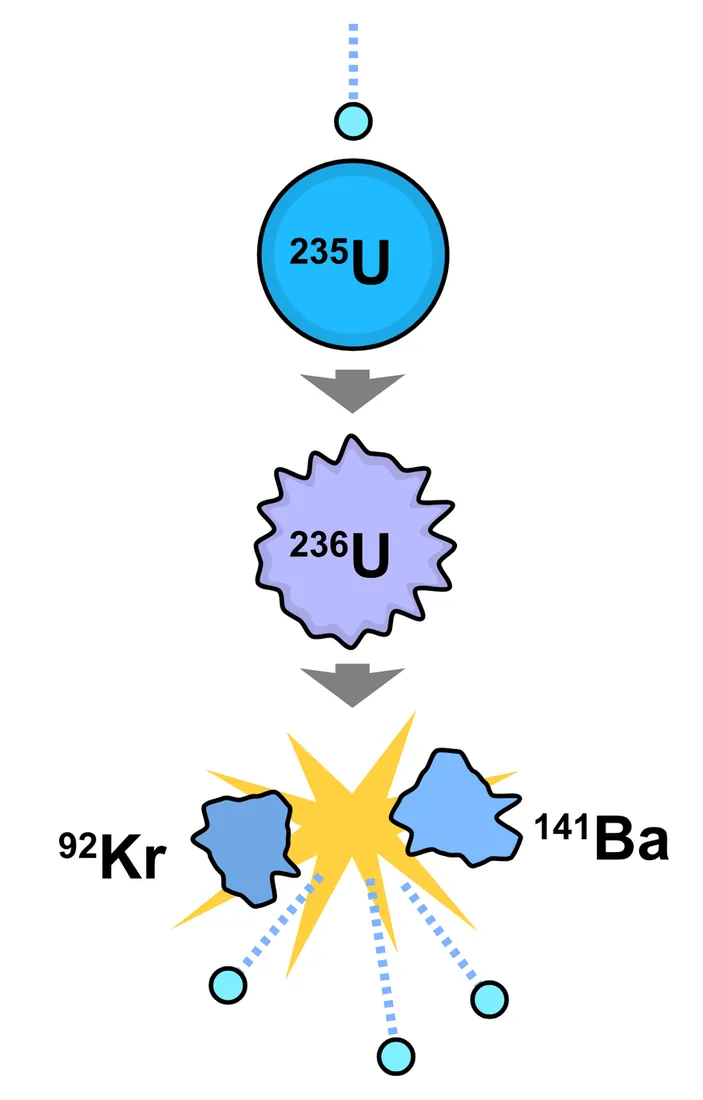
Nuclear fission: a heavy nucleus (e.g. uranium-235) splits into two smaller nuclei.
Fission releases great energy plus extra neutrons.
Those freed neutrons can split more nuclei, causing a self-sustaining chain reaction.
An uncontrolled chain reaction powers the atomic bomb; a controlled one runs a nuclear reactor.
Picture fission as a big rock breaking into pieces.
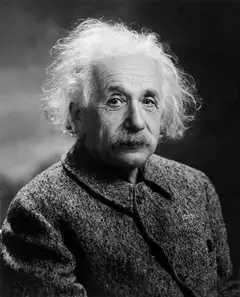
Albert EinsteinE = mc² (Einstein): a tiny loss of mass releases enormous energy.
Mass-Energy & Nuclear Fission
Check yourself
What is nuclear fission?
A heavy nucleus (e.g. uranium-235) splits into two smaller nuclei, releasing great energy plus extra neutrons that split more nuclei — a chain reaction. Picture a big rock breaking into pieces.
Atomic bomb vs nuclear reactor?
An uncontrolled chain reaction powers the atomic bomb; a controlled one runs a nuclear reactor.
What does E = mc² mean here?
Einstein's relation — a tiny loss of mass releases enormous energy. This mass-to-energy conversion is the source of all nuclear energy.
Those freed neutrons can split more nuclei, causing a self-sustaining .
Those freed neutrons can split more nuclei, causing a self-sustaining chain reaction.
What does this diagram show?
Mass-Energy & Nuclear Fission
Nuclear Fusion
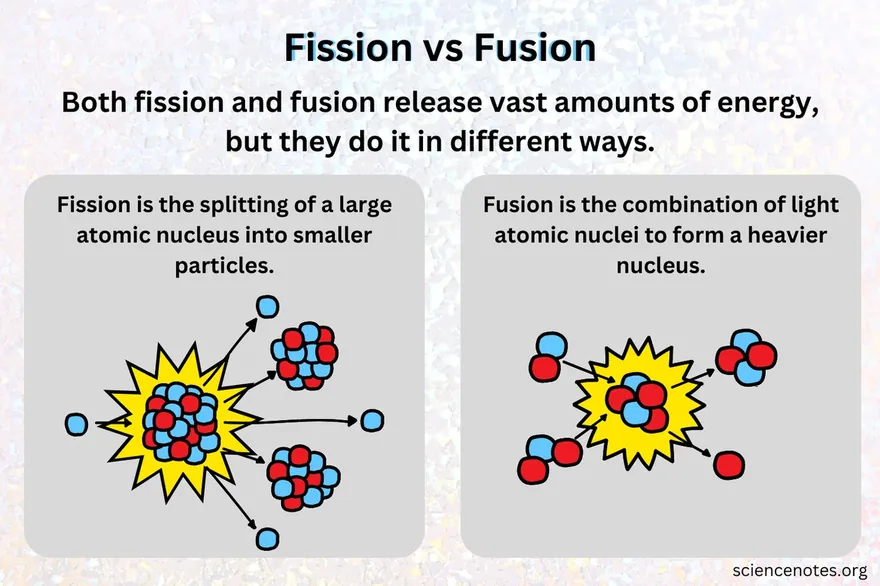
Nuclear fusion: two light nuclei join to form a heavier nucleus, releasing energy.
Fusion needs extremely high temperature and pressure to occur.
It is the energy source of the Sun and stars (hydrogen fusing into helium).
The hydrogen bomb is based on nuclear fusion.
Fusion releases far more energy per unit mass than fission.
Picture fusion as small pieces joining into a bigger one – the opposite of fission.
Feature
Fission
Fusion
Process
Heavy nucleus splits
Light nuclei combine
Example
Uranium-235
Hydrogen → Helium
Weapon
Atomic bomb
Hydrogen bomb
Occurs in
Reactor
Sun & stars
Nuclear fission vs fusion
Check yourself
What is nuclear fusion?
Two light nuclei join to form a heavier nucleus, releasing energy. It needs extremely high temperature and pressure and powers the Sun and stars (hydrogen into helium).
Which principle powers the hydrogen bomb?
Nuclear fusion, NOT fission. Fission powers the atom bomb. Fusion releases far more energy per unit mass.
Picture fusion as – the opposite of fission.
Picture fusion as small pieces joining into a bigger one – the opposite of fission.
Feature: Process → Fission · Fusion?
Fission
Heavy nucleus splits
Fusion
Light nuclei combine
Feature: Example → Fission · Fusion?
Fission
Uranium-235
Fusion
Hydrogen → Helium
Feature: Weapon → Fission · Fusion?
Fission
Atomic bomb
Fusion
Hydrogen bomb
Feature: Occurs in → Fission · Fusion?
Fission
Reactor
Fusion
Sun & stars
What does this diagram show?
Nuclear fission vs fusion
Atomic Bombs of 1945
Two atomic (fission) bombs were dropped on Japan in 1945.
The Hiroshima bomb used uranium-235 as the fissionable material.
The Nagasaki bomb used plutonium-239 as the fissionable material.
Both worked on the principle of an uncontrolled fission chain reaction.
The hydrogen bomb, in contrast, is based on fusion, not fission.
Check yourself
What fissionable material was used at Hiroshima and at Nagasaki?
Hiroshima — uranium-235; Nagasaki — plutonium-239 ('Fat Man'). Both worked on an uncontrolled fission chain reaction.
Two atomic (fission) bombs were dropped on Japan in .
Two atomic (fission) bombs were dropped on Japan in 1945.
Uses & Hazards of Radioactivity
Radiocarbon (C-14) dating finds the age of fossils, wood and old objects.
Nuclear reactors use controlled fission to generate electricity.
In medicine, cobalt-60 and gamma rays are used to treat cancer.
Radioactive tracers are used in medical diagnosis and to study processes.
Iodine-131 is used to study and treat thyroid disorders.
Hazard: radiation damages living cells and can cause cancer and genetic harm.
Protection requires shielding with thick lead or concrete.
Check yourself
Give the main uses of radioactivity.
Radiocarbon (C-14) dating of fossils and wood · nuclear reactors for electricity · cobalt-60 and gamma rays for cancer · tracers in diagnosis · iodine-131 for thyroid disorders.
What are the hazards, and what shielding is needed?
Radiation damages living cells and can cause cancer and genetic harm. Protection requires thick lead or concrete.
finds the age of fossils, wood and old objects.
Radiocarbon (C-14) dating finds the age of fossils, wood and old objects.
use controlled fission to generate electricity.
Nuclear reactors use controlled fission to generate electricity.
Radioactive are used in medical diagnosis and to study processes.
Radioactive tracers are used in medical diagnosis and to study processes.