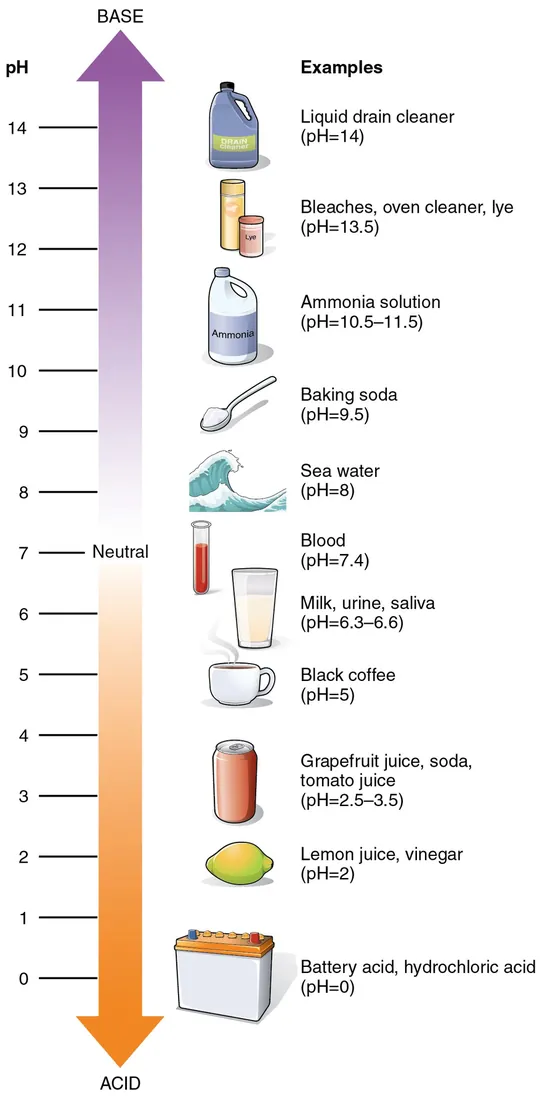
Substances split into three families by taste and behaviour: acids (sour), bases (bitter, soapy) and neutral (like pure water).
An acid releases positive hydrogen ions (H+) when dissolved in water; the word comes from Latin acidus, meaning sour.
A base releases negative hydroxide ions (OH-) in water.
An ion is an atom or group of atoms carrying an electric charge.
An alkali is a base that dissolves in water: every alkali is a base, but not every base is an alkali.
When an acid and base react they cancel out to form a salt (table salt NaCl is one member of a huge family).
Check yourself
How do acids, bases and neutral substances differ by taste and behaviour?
Acids are sour, bases are bitter and soapy, neutral substances are like pure water.
What does an acid release in water, and a base?
An acid releases positive hydrogen ions (H⁺); a base releases negative hydroxide ions (OH⁻).
Is every base an alkali?
No. An alkali is a base that dissolves in water — every alkali is a base, but not every base is an alkali.
What forms when an acid and a base react?
A salt (plus water) — table salt NaCl is one member of a huge family.
An when dissolved in water; the word comes from Latin acidus, meaning sour.
An acid releases positive hydrogen ions (H+) when dissolved in water; the word comes from Latin acidus, meaning sour.
An is an atom or group of atoms carrying an electric charge.
An ion is an atom or group of atoms carrying an electric charge.
How Acids and Bases Were Defined
A bare H+ never floats freely; it grabs water to form the hydronium ion (H3O+), which is what actually makes a solution acidic.
Bronsted-Lowry (1923): an acid is a proton (H+) donor, a base is a proton acceptor.
G. N. Lewis (1923): an acid accepts an electron pair, a base donates an electron pair (the widest definition).
Theory
Acid
Base
Arrhenius
Gives H+
Gives OH-
Bronsted-Lowry
Proton donor
Proton acceptor
Lewis
Electron-pair acceptor
Electron-pair donor
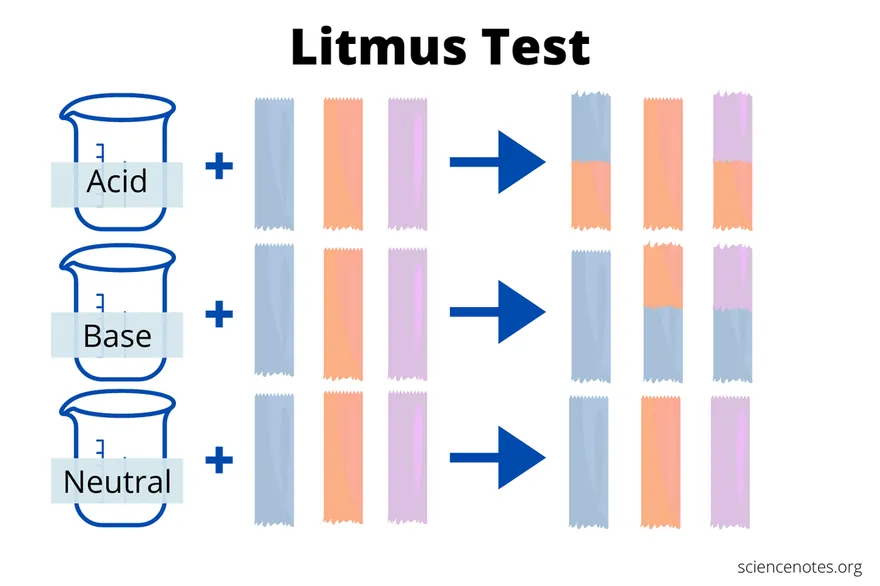
Robert BoyleIn the 1660s Robert Boyle described their behaviour: acids turn blue litmus red, bases turn red litmus blue.
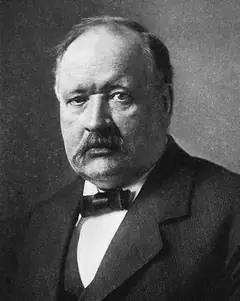
S. ArrheniusSvante Arrhenius (1880s) gave the modern water-based definition: acid gives H+ ions in water, base gives OH- ions in water (the most tested definition).
Check yourself
What is the hydronium ion?
H₃O⁺. A bare H⁺ never floats freely — it grabs water, and H₃O⁺ is what actually makes a solution acidic.
Bronsted-Lowry definition (1923)?
An acid is a proton (H⁺) donor; a base is a proton acceptor.
Lewis definition (1923)?
An acid accepts an electron pair; a base donates an electron pair — the widest definition.
What did Robert Boyle describe in the 1660s?
Acid/base behaviour with litmus: acids turn blue litmus red, bases turn red litmus blue.
What is Arrhenius' definition (1880s)?
The modern water-based definition — an acid gives H⁺ ions in water, a base gives OH⁻ ions in water. This is the most tested definition.
Theory: Arrhenius → Acid · Base?
Acid
Gives H+
Base
Gives OH-
Theory: Bronsted-Lowry → Acid · Base?
Acid
Proton donor
Base
Proton acceptor
Theory: Lewis → Acid · Base?
Acid
Electron-pair acceptor
Base
Electron-pair donor
Who is this, and what should you remember about them?
Svante Arrhenius
Svante Arrhenius (1880s) gave the modern water-based definition: acid gives H+ ions in water, base gives OH- ions in water (the most tested definition).
Properties of Acids and Bases
Acids taste sour, turn blue litmus red, react with active metals to give hydrogen gas, and are corrosive.
Bases taste bitter, feel soapy/slippery, turn red litmus blue, and strong ones are corrosive too.
Both conduct electricity in water: acids via moving H+ ions, bases via moving OH- ions.
Properties appear only when dissolved in water, because only then do molecules split into free ions.
Dry HCl gas does not turn dry litmus red: with no water it cannot form ions or H3O+; add a drop of water and colour changes at once.
Litmus indicator colour changes
Check yourself
Key properties of acids?
Taste sour, turn blue litmus red, react with active metals to give hydrogen gas, and are corrosive.
Key properties of bases?
Taste bitter, feel soapy/slippery, turn red litmus blue; strong ones are corrosive too.
Why do acids and bases conduct electricity only in water?
Only in water do molecules split into free ions — acids conduct via moving H⁺, bases via moving OH⁻.
Why does dry HCl gas not turn dry litmus red?
With no water it cannot form ions or H₃O⁺. Add a drop of water and the colour changes at once.
Properties appear , because only then do molecules split into free ions.
Properties appear only when dissolved in water, because only then do molecules split into free ions.
What does this diagram show?
Litmus indicator colour changes
Strong vs Weak (NOT the same as Concentration)
Strong/weak describes how completely a substance ionises in water, nothing else.
A strong acid ionises almost completely, releasing a flood of H+ ions (HCl, H2SO4, HNO3).
A weak acid ionises only partly: acetic acid in vinegar splits only about 1% yet is clearly sour.
Trap to avoid: 'strong' is not 'concentrated'. Concentration is how much acid is in the water; strength is how completely it ionises.
So a dilute strong acid is still strong, and a concentrated weak acid is still weak.
Type
Strong examples
Weak examples
Acids
HCl, H2SO4, HNO3
Acetic, citric
Bases
NaOH, KOH
NH4OH, Mg(OH)2
Check yourself
What does 'strong' actually describe?
How completely a substance ionises in water — nothing else. Strong acids: HCl, H₂SO₄, HNO₃. Weak: acetic, citric. Strong bases: NaOH, KOH. Weak: NH₄OH, Mg(OH)₂.
Is 'strong' the same as 'concentrated'?
No. Concentration is how much acid is in the water; strength is how completely it ionises. A dilute strong acid is still strong, and a concentrated weak acid is still weak.
How much does acetic acid in vinegar ionise?
Only about 1% — yet it is clearly sour. That is what makes it a weak acid.
A , releasing a flood of H+ ions (HCl, H2SO4, HNO3).
A strong acid ionises almost completely, releasing a flood of H+ ions (HCl, H2SO4, HNO3).
Acetic acid (CH3COOH) is the acid in vinegar; pure water-free form is called glacial acetic acid.
Mineral acids (HCl, H2SO4, HNO3) come from minerals, are strong and corrosive, used in labs and factories.
Organic acids come from living things, are usually weak and safe to eat.
Tartaric acid is abundant in grapes, tamarind and banana.
Oxalic acid is found in tomatoes and spinach.
Source
Acid present
Vinegar
Acetic acid
Lemon, orange
Citric acid
Curd, sour milk
Lactic acid
Tamarind, grapes
Tartaric acid
Tomato, spinach
Oxalic acid
Ant sting
Formic acid
Apple
Malic acid
Memory tip
Methanoic
Check yourself
Which acid is in vinegar?
Acetic acid (CH₃COOH). Its pure water-free form is called glacial acetic acid.
Acids in lemon/orange, curd/sour milk, tamarind/grapes?
Citric acid, lactic acid, and tartaric acid (tartaric is also in banana).
Acids in tomato/spinach, ant sting, and apple?
Oxalic acid, formic acid (methanoic acid), and malic acid.
What are mineral acids?
HCl, H₂SO₄, HNO₃ — they come from minerals, are strong and corrosive, and are used in labs and factories. Organic acids, by contrast, come from living things and are usually weak and safe to eat.
Source: Vinegar → Acid present?
Acid present
Acetic acid
Source: Lemon, orange → Acid present?
Acid present
Citric acid
Source: Curd, sour milk → Acid present?
Acid present
Lactic acid
Source: Tamarind, grapes → Acid present?
Acid present
Tartaric acid
Source: Tomato, spinach → Acid present?
Acid present
Oxalic acid
Source: Ant sting → Acid present?
Acid present
Formic acid
Source: Apple → Acid present?
Acid present
Malic acid
Common Bases (Alkalis)
Sodium hydroxide (NaOH), caustic soda, is a very strong alkali used to make soap and clean drains; dangerously corrosive.
Baking soda (NaHCO3) is a mild base used in cooking and antacids.
Washing soda (Na2CO3) is used for cleaning.
Calcium hydroxide Ca(OH)2, slaked lime, is used in whitewash.
Magnesium hydroxide, milk of magnesia, is a mild antacid for an acidic stomach.
All bases feel soapy, taste bitter, and turn red litmus blue.