Change applied: Increase temperature → Equilibrium shifts?
Equilibrium shifts
Endothermic direction
Rate of Reaction
Rate of reaction is how fast reactants are converted into products.
Higher concentration of reactants speeds up the reaction.
Higher temperature increases rate by giving particles more energy.
Greater surface area (powder vs lump) increases rate.
A catalyst speeds up the rate; an inhibitor (negative catalyst) slows it down.
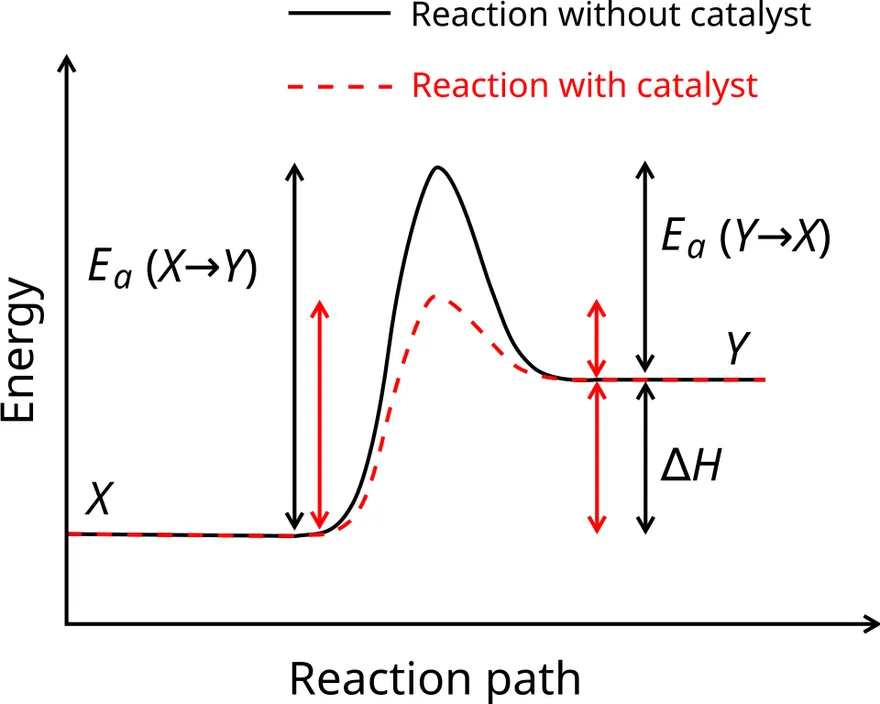
Activation energy is the minimum energy needed for reactant particles to react.
Check yourself
What increases the rate of a reaction?
Higher concentration, higher temperature, greater surface area (powder vs lump), and a catalyst.
What is activation energy, and how does a catalyst work?
The minimum energy needed for reactant particles to react. A catalyst lowers the activation energy, giving an easier path, and is itself unchanged at the end.
What slows a reaction down?
An inhibitor (negative catalyst). Promoters and both homogeneous and heterogeneous catalysts all speed reactions up.
is how fast reactants are converted into products.
Rate of reaction is how fast reactants are converted into products.
Higher increases rate by giving particles more energy.
Higher temperature increases rate by giving particles more energy.
Catalysis
A catalyst changes the speed of a reaction but is itself unchanged at the end.
A catalyst works by lowering the activation energy, giving an easier path.
Positive catalysts speed up reactions; negative catalysts (inhibitors) slow them down.
Nickel (Ni) is the catalyst for hydrogenation of vegetable oil into vanaspati ghee.
Iron is used in the Haber process (ammonia); vanadium pentoxide (V2O5) in the Contact process.
Enzymes are biological catalysts that control reactions in living bodies.
Process
Catalyst
Vegetable oil → ghee
Nickel (Ni)
Haber process (NH3)
Iron (Fe)
Contact process (H2SO4)
V2O5
Catalyst lowering activation energy
Check yourself
Name the three exam catalysts and their processes.
Nickel (Ni) — hydrogenation of vegetable oil into vanaspati ghee. Iron (Fe) — Haber process for ammonia. V₂O₅ — Contact process for H₂SO₄.
What are the biological catalysts?
Enzymes — they control reactions in living bodies.
A changes the speed of a reaction but is itself unchanged at the end.
A catalyst changes the speed of a reaction but is itself unchanged at the end.
reactions; negative catalysts (inhibitors) slow them down.
Positive catalysts speed up reactions; negative catalysts (inhibitors) slow them down.
Process: Vegetable oil → ghee → Catalyst?
Catalyst
Nickel (Ni)
Process: Haber process (NH3) → Catalyst?
Catalyst
Iron (Fe)
Process: Contact process (H2SO4) → Catalyst?
Catalyst
V2O5
What does this diagram show?
Catalyst lowering activation energy
Electrolytes & Conductivity
An electrolyte is a substance that conducts electricity when molten or dissolved in water.
A strong electrolyte ionises almost completely (e.g. NaCl, HCl, H2SO4).
A weak electrolyte ionises only partly (e.g. acetic acid, ammonia).
Conductivity of a strong electrolyte decreases on dilution (fewer ions per unit volume).
Non-electrolytes (e.g. sugar, urea) do not conduct as they form no ions.
Conduction occurs because ions are free to carry charge through the solution.
Check yourself
Strong vs weak electrolyte?
A strong electrolyte ionises almost completely (NaCl, HCl, H₂SO₄); a weak one ionises only partly (acetic acid, ammonia).
What happens to the conductivity of a strong electrolyte on dilution?
Specific conductivity decreases — the same ions spread into more solvent, so there are fewer ions per unit volume (molar conductivity, though, rises).
Why do sugar and urea not conduct electricity in water?
They are non-electrolytes — they form no ions, and conduction needs free ions to carry charge.
An is a substance that conducts electricity when molten or dissolved in water.
An electrolyte is a substance that conducts electricity when molten or dissolved in water.
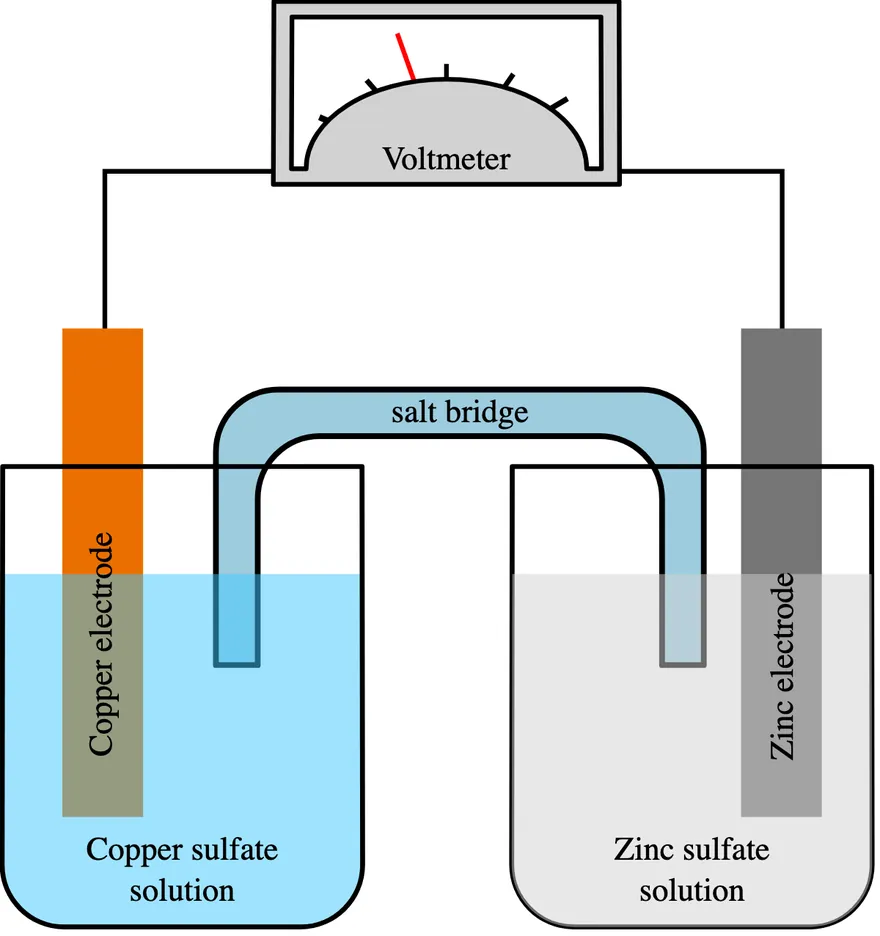
Electrochemistry: Cells & Electrode Potential
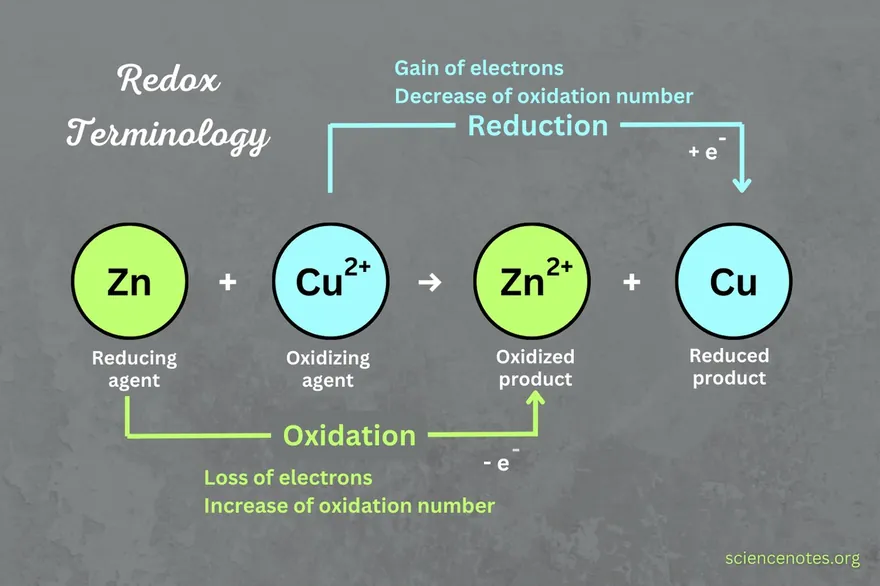
A redox couple (e.g. Zn2+/Zn) is the oxidised and reduced forms taken together – basis of cells.
Electrode potential measures a metal's tendency to lose or gain electrons.
A more negative electrode potential means a stronger reducing power (loses electrons easily).
So for potentials 0.5 V, −3 V, −1.2 V, reducing power order is the −3 V metal > −1.2 V > 0.5 V.
In electrolysis, electric current drives a non-spontaneous redox reaction.
Quantity
Value/Meaning
Faraday constant
≈ 96,500 C per mole of electrons
More negative E°
Greater reducing power
More positive E°
Greater oxidising power
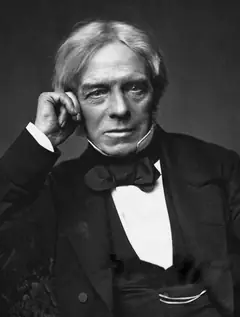
Michael FaradayFaraday constant (F) ≈ 96,500 coulombs – the charge carried by one mole of electrons.
Electrochemistry: Cells & Electrode Potential
Check yourself
What does electrode potential measure?
A metal's tendency to lose or gain electrons. A more negative E° means stronger reducing power — so for 0.5 V, −3 V and −1.2 V, the order is −3 V > −1.2 V > 0.5 V.
What is the Faraday constant?
≈ 96,500 coulombs — the charge carried by one mole of electrons. It is a universal constant, independent of electrolyte, current or solvent.
A (e.g. Zn2+/Zn) is the oxidised and reduced forms taken together – basis of cells.
A redox couple (e.g. Zn2+/Zn) is the oxidised and reduced forms taken together – basis of cells.
In , electric current drives a non-spontaneous redox reaction.
In electrolysis, electric current drives a non-spontaneous redox reaction.
Quantity: Faraday constant → Value/Meaning?
Value/Meaning
≈ 96,500 C per mole of electrons
Quantity: More negative E° → Value/Meaning?
Value/Meaning
Greater reducing power
Quantity: More positive E° → Value/Meaning?
Value/Meaning
Greater oxidising power
Who is this, and what should you remember about them?
Michael Faraday
Faraday constant (F) ≈ 96,500 coulombs – the charge carried by one mole of electrons.
What does this diagram show?
Electrochemistry: Cells & Electrode Potential
Some Important Reactions to Know
Limewater (Ca(OH)2) turns milky when carbon dioxide (CO2) is passed through it.
The milkiness is due to insoluble calcium carbonate (CaCO3) forming.
Zn + H2SO4 → ZnSO4 + H2 releases hydrogen, tested by the 'pop' sound.
Fe + CuSO4 → FeSO4 + Cu: blue colour fades to green as copper is set free.
CaO + H2O → Ca(OH)2: quicklime + water gives slaked lime with much heat.
Check yourself
What turns limewater milky, and why?
Carbon dioxide (CO₂). Limewater is Ca(OH)₂, and insoluble calcium carbonate (CaCO₃) forms: Ca(OH)₂ + CO₂ → CaCO₃ + H₂O.
What do you observe when iron is put in copper sulphate solution?
The blue colour fades to green as copper is set free: Fe + CuSO₄ → FeSO₄ + Cu.
The milkiness is due to insoluble (CaCO3) forming.
The milkiness is due to insoluble calcium carbonate(CaCO3) forming.
releases hydrogen, tested by the 'pop' sound.
Zn + H2SO4 → ZnSO4 + H2 releases hydrogen, tested by the 'pop' sound.
: quicklime + water gives slaked lime with much heat.
CaO + H2O → Ca(OH)2: quicklime + water gives slaked lime with much heat.