Chemistry notes · Chapter 8 of 11
Organic Chemistry & Hydrocarbons
12 sections, 82 flashcards. Open a card to check your answer, or revise them in the app with spaced revision.
What is Organic Chemistry
- Organic chemistry is the study of carbon-containing compounds.
- Carbon is present in every organic compound, and most also contain hydrogen.
- The old Vital Force Theory wrongly claimed organic compounds form only inside living bodies.
- In 1828, Friedrich Wohler made urea in the lab from ammonium cyanate, a non-living salt.
- Wohler's experiment is celebrated as the birth of modern organic chemistry.
- Carbon also combines with oxygen, chlorine and sulphur to build medicines, plastics and living tissue.
Check yourself
What is organic chemistry?
The study of carbon-containing compounds. Carbon is present in every organic compound, and most also contain hydrogen.
What was the Vital Force Theory?
The old, wrong claim that organic compounds form only inside living bodies.
What did Wöhler do in 1828?
Made urea in the lab from ammonium cyanate, a non-living salt — celebrated as the birth of modern organic chemistry.
Carbon also combines with sulphur to build medicines, plastics and living tissue.
Carbon also combines with oxygen, chlorine and sulphur to build medicines, plastics and living tissue.
Carbon – The Backbone Element
- Carbon lies in Group 14 with silicon, germanium, tin, lead and flerovium.
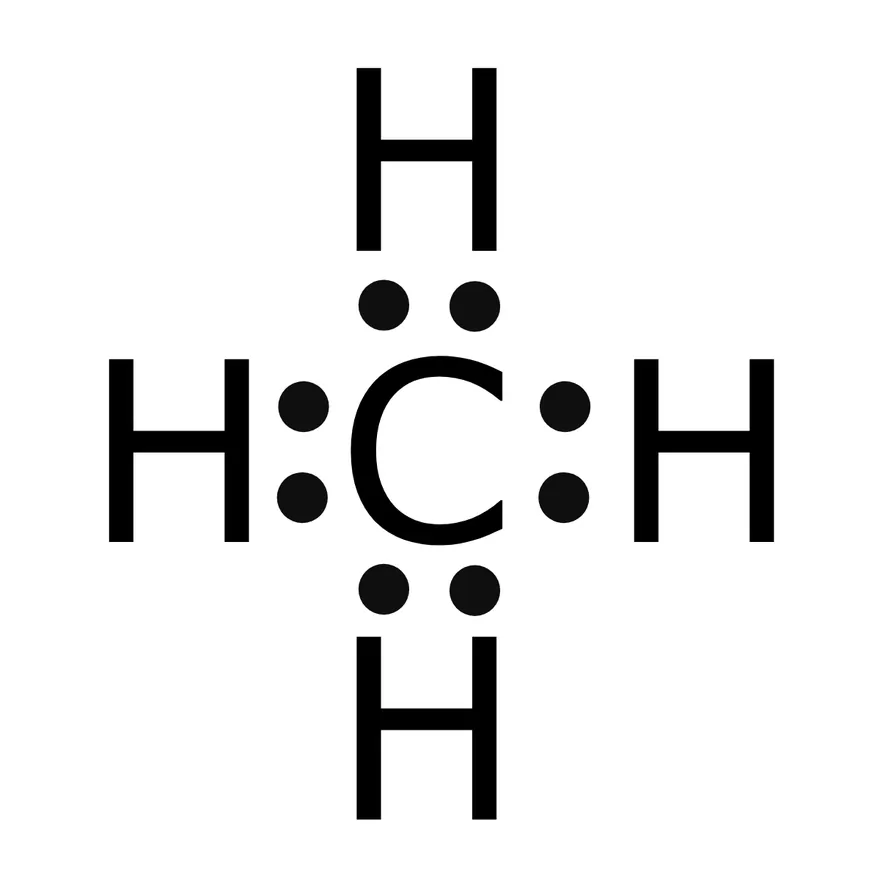
- A carbon atom has 4 valence electrons (2s² 2p²) and forms four covalent bonds.
- A covalent bond is formed by sharing a pair of electrons between two atoms.
- Carbon is a non-metal that always shares electrons; it never gives or grabs them.
- CO₂ makes up about 0.03% of air; carbon is the 17th most abundant element by mass.
- The carbon family mostly shows +4 and +2 oxidation states; +4 compounds are usually covalent.
Check yourself
Where does carbon sit, and how many bonds does it form?
Group 14 (with silicon, germanium, tin, lead). It has 4 valence electrons (2s² 2p²) and forms four covalent bonds.
How much CO₂ is in air, and how abundant is carbon?
CO₂ makes up about 0.03% of air; carbon is the 17th most abundant element by mass.
A is formed by sharing a pair of electrons between two atoms.
A covalent bond is formed by sharing a pair of electrons between two atoms.
Carbon is a that always shares electrons; it never gives or grabs them.
Carbon is a non-metal that always shares electrons; it never gives or grabs them.
The carbon family mostly shows oxidation states; +4 compounds are usually covalent.
The carbon family mostly shows +4 and +2 oxidation states; +4 compounds are usually covalent.
What does this diagram show?
Carbon – The Backbone Element
Catenation, Isotopes and Allotropes
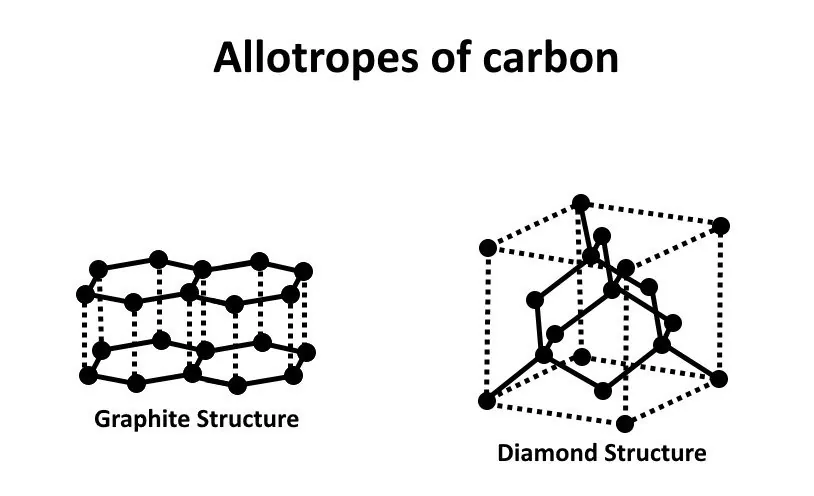
- Catenation is carbon's ability to link with other carbon atoms into chains and rings.
- Catenation uses single, double or triple bonds and creates millions of compounds.
- Carbon has two stable isotopes (¹²C, ¹³C) and radioactive ¹⁴C (half-life ~5770 years).
- ¹⁴C is used for radiocarbon dating of fossils.
- Allotropy means the same element exists in different structural forms.
- Carbon's three main allotropes are diamond, graphite and fullerenes (like C₆₀).
| Element | Catenation tendency |
|---|---|
| Carbon (C) | Very high |
| Silicon (Si) | Moderate |
| Germanium (Ge) | Low |
| Tin (Sn) | Very low |
| Lead (Pb) | Lowest |
Check yourself
What is catenation, and which element does it best?
Carbon's ability to link with other carbon atoms into chains and rings. Order: Carbon (very high) > Silicon > Germanium > Tin > Lead (lowest).
Which carbon isotope is used for dating, and what is its half-life?
¹⁴C, half-life about 5770 years — used for radiocarbon dating of fossils. ¹²C and ¹³C are the stable isotopes.
Name carbon's three main allotropes.
Diamond, graphite and fullerenes (like C₆₀).
Catenation uses and creates millions of compounds.
Catenation uses single, double or triple bonds and creates millions of compounds.
means the same element exists in different structural forms.
Allotropy means the same element exists in different structural forms.
Element: Carbon (C) → Catenation tendency?
- Catenation tendency
- Very high
Element: Silicon (Si) → Catenation tendency?
- Catenation tendency
- Moderate
Element: Germanium (Ge) → Catenation tendency?
- Catenation tendency
- Low
Element: Tin (Sn) → Catenation tendency?
- Catenation tendency
- Very low
Element: Lead (Pb) → Catenation tendency?
- Catenation tendency
- Lowest
What does this diagram show?
Catenation, Isotopes and Allotropes
Oxides of Carbon – CO and CO₂
- Carbon monoxide (CO) is a neutral oxide with a triple bond (C≡O), bond order 3.
- CO is deadly poisonous as it binds haemoglobin far stronger than oxygen, causing suffocation.
- CO forms by the incomplete burning of fuels like petrol and diesel.
- CO's lone pair lets it bond to metals, forming metal carbonyls.
- Carbon dioxide (CO₂) is an acidic oxide that drives the greenhouse effect and global warming.
- Lime-water test: CO₂ turns lime-water milky as calcium carbonate (CaCO₃) forms.
| Property | CO | CO₂ |
|---|---|---|
| Nature | Neutral | Acidic |
| Bond | Triple (C≡O) | Double bonds |
| Toxicity | Highly toxic | Not toxic |
| Source | Incomplete burning | Complete burning |
Check yourself
What kind of bond and bond order does CO have?
A triple bond (C≡O) with bond order 3 — and CO is a neutral oxide.
Why is carbon monoxide deadly?
It binds haemoglobin far more strongly than oxygen, causing suffocation. It forms by the incomplete burning of fuels like petrol and diesel.
CO vs CO₂ — nature, toxicity and source?
CO: neutral, triple bond, highly toxic, from incomplete burning. CO₂: acidic, double bonds, not toxic, from complete burning.
CO's lone pair lets it bond to metals, forming carbonyls.
CO's lone pair lets it bond to metals, forming metal carbonyls.
is an acidic oxide that drives the greenhouse effect and global warming.
Carbon dioxide (CO₂) is an acidic oxide that drives the greenhouse effect and global warming.
: CO₂ turns lime-water milky as calcium carbonate (CaCO₃) forms.
Lime-water test: CO₂ turns lime-water milky as calcium carbonate (CaCO₃) forms.
Property: Nature → CO · CO₂?
- CO
- Neutral
- CO₂
- Acidic
Property: Bond → CO · CO₂?
- CO
- Triple (C≡O)
- CO₂
- Double bonds
Property: Toxicity → CO · CO₂?
- CO
- Highly toxic
- CO₂
- Not toxic
Property: Source → CO · CO₂?
- CO
- Incomplete burning
- CO₂
- Complete burning
Hydrocarbons and Their Types
- A hydrocarbon contains only carbon and hydrogen atoms.
- Petrol, LPG and natural gas are everyday hydrocarbons.
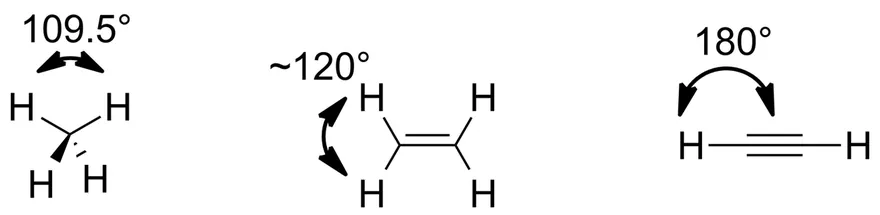
- A saturated hydrocarbon has only C–C single bonds and holds the maximum hydrogen possible.
- An unsaturated hydrocarbon has a C=C double or C≡C triple bond and is more reactive.
- Alkanes (old name paraffin) are saturated and unreactive.
- Alkenes (olefins) have one double bond; alkynes have one triple bond.
| Family | Bond | Formula | Example |
|---|---|---|---|
| Alkane | Single | CnH2n+2 | Methane CH₄ |
| Alkene | One double | CnH2n | Ethene C₂H₄ |
| Alkyne | One triple | CnH2n-2 | Ethyne C₂H₂ |
Check yourself
What is a hydrocarbon?
A compound of only carbon and hydrogen — petrol, LPG and natural gas are everyday examples.
Saturated vs unsaturated hydrocarbon?
Saturated has only C–C single bonds and the maximum hydrogen. Unsaturated has a C=C double or C≡C triple bond and is more reactive.
Alkane, alkene, alkyne — bond, formula and example?
Alkane (paraffin): single, CnH2n+2, methane CH₄. Alkene (olefin): one double, CnH2n, ethene C₂H₄. Alkyne: one triple, CnH2n−2, ethyne C₂H₂.
(old name paraffin) are saturated and unreactive.
Alkanes (old name paraffin) are saturated and unreactive.
(olefins) have one double bond; alkynes have one triple bond.
Alkenes (olefins) have one double bond; alkynes have one triple bond.
Family: Alkane → Bond · Formula · Example?
- Bond
- Single
- Formula
- CnH2n+2
- Example
- Methane CH₄
Family: Alkene → Bond · Formula · Example?
- Bond
- One double
- Formula
- CnH2n
- Example
- Ethene C₂H₄
Family: Alkyne → Bond · Formula · Example?
- Bond
- One triple
- Formula
- CnH2n-2
- Example
- Ethyne C₂H₂
What does this diagram show?
Hydrocarbons and Their Types
The C=C Double Bond in Alkenes
- A double bond is made of two different bonds, not two identical ones.
- The first is a strong sigma (σ) bond from head-on overlap, ~397 kJ/mol.
- The second is a weaker pi (π) bond from sideways p-orbital overlap, ~284 kJ/mol.
- The sigma bond is always the first bond between any two atoms.
- C=C length is 134 pm, shorter than the C–C single bond at 154 pm.
- Loosely held pi electrons are attacked by electrophiles, making alkenes more reactive.
| Feature | Sigma (σ) | Pi (π) |
|---|---|---|
| Overlap | Head-on | Sideways |
| Strength | Stronger (~397) | Weaker (~284) |
| Order | First bond | Second bond |
Check yourself
Is a double bond made of two identical bonds?
No. It is one strong sigma (σ) bond from head-on overlap (~397 kJ/mol) plus one weaker pi (π) bond from sideways p-orbital overlap (~284 kJ/mol).
How long is a C=C bond compared with C–C?
134 pm versus 154 pm — the double bond is shorter.
Why are alkenes attacked by electrophiles?
Their loosely held pi electrons are exposed, making alkenes more reactive.
The between any two atoms.
The sigma bond is always the first bond between any two atoms.
Feature: Overlap → Sigma (σ) · Pi (π)?
- Sigma (σ)
- Head-on
- Pi (π)
- Sideways
Feature: Strength → Sigma (σ) · Pi (π)?
- Sigma (σ)
- Stronger (~397)
- Pi (π)
- Weaker (~284)
Feature: Order → Sigma (σ) · Pi (π)?
- Sigma (σ)
- First bond
- Pi (π)
- Second bond
Electrophiles and Nucleophiles
- An electrophile is an electron-seeking, electron-deficient species.
- Examples of electrophiles include H⁺, NO₂⁺, BF₃ and Cl⁺.
- A nucleophile is electron-rich and donates electrons (e.g. OH⁻, NH₃, CN⁻).
- Negative ions and lone-pair species are not electrophiles.
- Alkenes are attacked by electrophiles because their pi electrons are exposed.
Check yourself
What is an electrophile? Give examples.
An electron-seeking, electron-deficient species with an empty orbital: H⁺, NO₂⁺, BF₃, Cl⁺.
What is a nucleophile, and what is never an electrophile?
A nucleophile is electron-rich and donates electrons: OH⁻, NH₃, CN⁻. Negative ions and lone-pair species are NOT electrophiles — and stable cations like Na⁺ are not either, since they have no vacant orbital.
Benzene – A Special Ring Hydrocarbon
- Benzene (C₆H₆) is a flat six-carbon ring with alternating single and double bonds.
- It is the simplest aromatic hydrocarbon, a class of unusually stable rings.
- Benzene has 6 C–C sigma bonds and 6 C–H sigma bonds = 12 sigma bonds.
- Its three double bonds give 3 pi bonds.
- Total: benzene has 12 σ bonds and 3 π bonds.
- Spreading of pi electrons (delocalisation) gives benzene its remarkable stability.
Check yourself
Describe benzene.
C₆H₆ — a flat six-carbon ring with alternating single and double bonds; the simplest aromatic hydrocarbon.
How many sigma and pi bonds does benzene have?
12 sigma (6 C–C plus 6 C–H) and 3 pi — 15 covalent bonds in all.
Why is benzene so stable?
Delocalisation — the spreading of its pi electrons around the ring.
It is the simplest , a class of unusually stable rings.
It is the simplest aromatic hydrocarbon, a class of unusually stable rings.
Spreading of pi electrons () gives benzene its remarkable stability.
Spreading of pi electrons (delocalisation) gives benzene its remarkable stability.
Homologous Series
- A homologous series is a family of compounds sharing one functional group and general formula.
- Individual members are called homologues.
- Each homologue differs from the next by one –CH₂– unit (one carbon, two hydrogens).
- Properties like boiling point change gradually as you move up the series.
- Members share similar chemical properties due to the same functional group.
Check yourself
What is a homologous series?
A family of compounds sharing one functional group and a general formula. Each member (a homologue) differs from the next by one –CH₂– unit, so boiling point changes gradually while chemical properties stay similar.
Individual members are called .
Individual members are called homologues.
Properties like as you move up the series.
Properties like boiling point change gradually as you move up the series.
Common Functional Groups and Acids
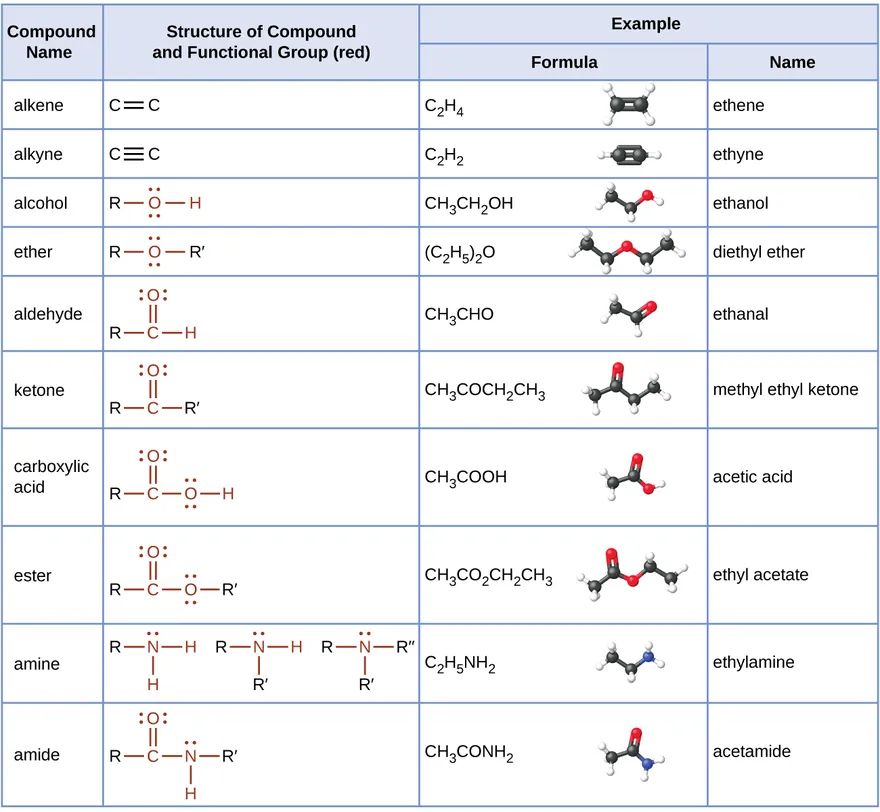
- A functional group is the reactive atom/group that decides a compound's chemistry.
- Acetic acid (CH₃COOH) has a sharp vinegar smell and is the acid in vinegar.
- Oxalic acid is the simplest dicarboxylic acid, written as HOOC–COOH.
- Alcohols contain –OH; aldehydes contain –CHO; ketones contain C=O.
- Carboxylic acids contain the –COOH group and are weak acids.
| Group | Formula | Class |
|---|---|---|
| Hydroxyl | –OH | Alcohol |
| Carboxyl | –COOH | Acid |
| Aldehyde | –CHO | Aldehyde |
| Carbonyl | C=O | Ketone |
Check yourself
Name the functional group for alcohol, acid, aldehyde and ketone.
–OH hydroxyl (alcohol) · –COOH carboxyl (acid) · –CHO (aldehyde) · C=O carbonyl (ketone).
What is oxalic acid's structure?
HOOC–COOH (C₂H₂O₄) — the simplest dicarboxylic acid, two –COOH groups joined together.
Which acid smells of vinegar?
Acetic acid (CH₃COOH) — sharp and pungent, and it is the acid in vinegar.
A is the reactive atom/group that decides a compound's chemistry.
A functional group is the reactive atom/group that decides a compound's chemistry.
contain –OH; aldehydes contain –CHO; ketones contain C=O.
Alcohols contain –OH; aldehydes contain –CHO; ketones contain C=O.
contain the –COOH group and are weak acids.
Carboxylic acids contain the –COOH group and are weak acids.
Group: Hydroxyl → Formula · Class?
- Formula
- –OH
- Class
- Alcohol
Group: Carboxyl → Formula · Class?
- Formula
- –COOH
- Class
- Acid
Group: Aldehyde → Formula · Class?
- Formula
- –CHO
- Class
- Aldehyde
Group: Carbonyl → Formula · Class?
- Formula
- C=O
- Class
- Ketone
What does this diagram show?
Common Functional Groups and Acids
Fuel Gases – LPG, CNG, Natural Gas, Biogas
- Natural gas and CNG are mainly methane (CH₄).
- LPG is mainly butane and propane.
- LPG and natural gas are odourless, so ethyl mercaptan is added to detect leaks by smell.
- Biogas is mainly methane, with carbon dioxide; methane is its fuel gas.
- Incomplete burning of petrol and diesel produces poisonous carbon monoxide.
| Fuel | Main constituent |
|---|---|
| Natural gas | Methane |
| CNG | Methane |
| LPG | Butane / Propane |
| Biogas | Methane |
Check yourself
What is the main constituent of natural gas and CNG?
Methane (CH₄) for both.
What is LPG mainly made of?
Butane and propane — with butane as the major constituent.
Why can you smell an LPG leak if the gas is odourless?
Ethyl mercaptan (C₂H₅SH) is deliberately added to LPG and natural gas so leaks can be detected by smell.
What is biogas mainly made of?
Mainly methane (the fuel gas, ~50–70%) with carbon dioxide; produced by anaerobic digestion of animal and plant waste.
Fuel: Natural gas → Main constituent?
- Main constituent
- Methane
Fuel: CNG → Main constituent?
- Main constituent
- Methane
Fuel: LPG → Main constituent?
- Main constituent
- Butane / Propane
Fuel: Biogas → Main constituent?
- Main constituent
- Methane
Polymers – Natural and Synthetic
- A polymer is a large molecule made by joining many small repeating units (monomers).
- Natural rubber is a polymer of isoprene.
- Thermoplastics soften on heating and can be remoulded (e.g. polythene, PVC).
- Thermosetting plastics (e.g. bakelite) set permanently and do NOT soften again.
- Cotton, silk, wool and rubber are natural; nylon, polyester and plastics are synthetic.
| Type | Property | Example |
|---|---|---|
| Thermoplastic | Re-mouldable | Polythene, PVC |
| Thermoset | Permanent set | Bakelite |
Check yourself
What is a polymer?
A large molecule made by joining many small repeating units (monomers).
What is natural rubber a polymer of?
Isoprene (2-methyl-1,3-butadiene), giving cis-polyisoprene.
Thermoplastic vs thermosetting plastic?
Thermoplastics soften on heating and can be remoulded (polythene, PVC, Teflon, polystyrene). Thermosetting plastics set permanently and do NOT soften again (bakelite, melamine).
Which fibres are natural and which are synthetic?
Natural: cotton, silk, wool, rubber. Synthetic: nylon, polyester, plastics. Neoprene is a synthetic rubber (an elastomer), not a thermoplastic.
Type: Thermoplastic → Property · Example?
- Property
- Re-mouldable
- Example
- Polythene, PVC
Type: Thermoset → Property · Example?
- Property
- Permanent set
- Example
- Bakelite
All 11 chapters of Chemistry notes
- Basic Concepts, Matter & Measurement13 sections
- Structure of Atom12 sections
- Periodic Table & Periodicity11 sections
- Chemical Bonding & Molecular Structure12 sections
- States of Matter & Gas Laws12 sections
- Chemical Reactions, Equilibrium & Catalysis13 sections
- Acids, Bases & Salts13 sections
- Organic Chemistry & Hydrocarbons12 sections
- Chemistry in Everyday Life & Important Compounds11 sections
- Biomolecules (Chemistry)13 sections
- Radioactivity & Nuclear Chemistry11 sections